
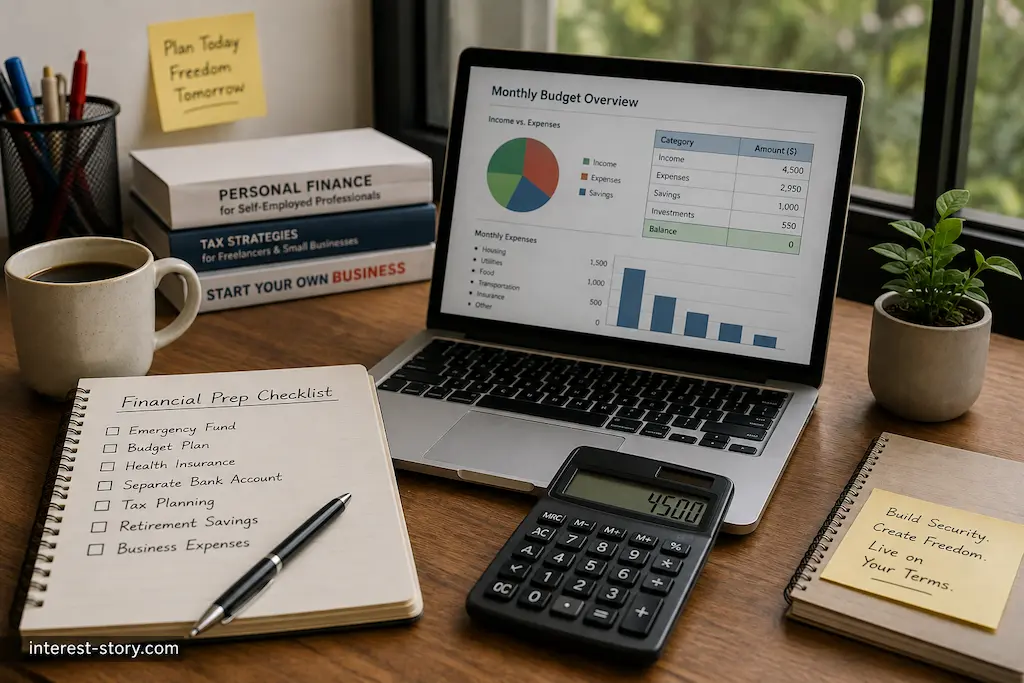
Starting your own business is both a career choice and a financial decision. Freelancing, consulting, running an online store, or working as an independent entrepreneur can be exciting, but it can also suddenly disrupt your cash flow. You are no longer reliant on a stable income; instead, you must manage irregular earnings, business expenses, taxes, and fluctuations in your monthly revenue.
Many people spend months refining their business plan, developing websites, or acquiring clients before launching their business. While they may have a well-developed business plan, they often lack a household budget. Early income fluctuations can cause personal financial stress that rivals the stress of running the business itself.
Financial preparation before starting your business does not mean waiting until all risks have vanished. A solid financial foundation allows you to focus on business development—even during quieter periods—without worrying about finances. Better financial preparation before making the switch gives you greater freedom as your business grows.
Your Household Budget Should Be Ready Before Business Starts
One of the biggest challenges in starting a business is not so much earning money but managing income across different months. A household budget designed for a fixed income will face significant challenges when earnings arrive irregularly and in varying amounts. Before quitting your job, it is important to carefully review your monthly expenses. Distinguish between essential household costs and expenses that you could cut if it takes longer for business income to stabilize. You do not necessarily have to drastically reduce spending on everything you enjoy. It is crucial to understand which expenses are necessary as the business grows.
Many aspiring entrepreneurs find it helpful to live on a planned self-employment budget in the months leading up to the transition. If your household budget seems unrealistic while your income is stable, it will become much more difficult when that income becomes unstable. Reviewing your budget in advance allows you to adjust it as your income steadily grows.
Separate Business and Personal Finances
A common issue for the newly self-employed is the mixing of business and personal expenses. When you deposit all funds into the same account and use them to pay personal bills, you make it difficult to gauge the business’s financial health.
Even if you work alone, separating business and personal finances improves financial clarity. First, business income should be used to cover operating expenses, equipment, software, professional services, and taxes. Personal income should be transferred according to a plan rather than withdrawn immediately whenever funds become available.
This separation simplifies financial management. You no longer have to worry about whether your bank balance is sufficient for a business purchase; instead, you can clearly see which funds are allocated to business operations and which to household expenses. Separating funds from the start saves time when analyzing business results or preparing financial documents.
Unstable Income Expectations
Many people believe that the biggest obstacle to freelancing is insufficient income. In reality, however, planning is often just as challenging as the income itself. Freelancers may complete multiple projects in a month but not get paid until weeks later. Consultants sometimes send invoices to clients only after the work is finished. Seasonal businesses also experience busy and quiet periods. Even profitable companies can face cash flow issues due to unpredictable payment schedules.
To manage this, it is important to look beyond just monthly income. Consider when invoices will be paid, how long clients take to process payments, and whether your family can afford delayed payments. Understanding your cash flow before becoming a freelancer can help you develop a financial plan tailored to self-employment, rather than relying solely on a salary.
Build a Financial System; Don’t Rely on Memory
Employees automatically handle certain financial responsibilities. You have easy access to your income statements, and taxes and pension contributions are often deducted before you receive your paycheck. Freelancers usually bear these responsibilities themselves. You must gather income records, organize receipts, track expenses, and set aside money for future needs, rather than relying on an employer’s payroll system.
Set up these systems before serving your first client so they are easier to maintain later. Consistency is far more important than the complexity of accounting software, spreadsheets, professional business accounts, or other organizational methods. Simple weekly routines are more effective than trying to compile months’ worth of financial data all at once. A sound financial system reduces stress, improves decision-making efficiency, and allows you to focus on your work rather than paperwork.
Plan the First Year, Not the First Months
One of the biggest pitfalls in planning is expecting everything to simply fall into place once the business is up and running. The first year of self-employment is typically a period of learning, adaptation, and gradual development, rather than a time of immediate stability.
Instead of focusing solely on the first month, consider how your business and household finances might shift over the course of the year. Seasonal demand, client schedules, or time spent developing new services can result in some months being busier than others. Viewing matters from an annual perspective allows you to set more realistic expectations regarding short-term performance.
This broader perspective also facilitates better planning for business investments. Long-term expansion often entails equipment upgrades, professional training, marketing costs, software subscriptions, or industry association memberships. Planning ahead helps ensure these expenses do not negatively impact your household finances.
Recognizing Signs of Financial Readiness
The timing is rarely ideal for starting a business. However, there are practical signs indicating that your finances are well-prepared for entrepreneurship. If your household budget reflects sensible spending, you have emergency savings, your business plan has been tested by customers, and you know how to handle income fluctuations, you will likely feel more confident moving forward. While this foundation doesn’t eliminate every challenge, it can reduce the risk of business volatility quickly putting a strain on your personal finances.
It is crucial to understand how well you handle financial uncertainty. Some people choose to quit their traditional jobs after a few months of stability, while others start a business while still employed. Neither strategy is perfect; the ideal choice depends on your financial goals, personal responsibilities, and income level. Self-employment is about more than just replacing a salary; ensuring your finances can support a developing career is essential.
Keep Monitoring Your Finances After the Transition
Starting a business is just the beginning of financial planning, not the end. Once you become self-employed, your financial situation will shift as your business grows, your customer base changes, and your personal goals evolve. It is advisable to review your household budget and business performance on a monthly basis. Check whether your personal expenses align with your income, whether business costs are manageable, and if you are steadily progressing toward your long-term financial goals.
Regular reviews help you spot potential issues before they arise. For instance, a client’s income might be too high, business expenses could rise faster than anticipated, or a move or other life events might cause changes in household spending. Spotting these trends early is far more beneficial than waiting for cash flow problems to arise. Simple financial assessments are actually very easy to carry out; even a quick monthly check can help you understand the interplay between your personal and business finances.
A Financial Readiness Checklist Before Becoming Self-Employed
Preparing for self-employment involves much more than having a business idea. Reviewing a few key areas beforehand can help you identify where additional preparation may be worthwhile.
| Planning Area | Questions to Consider |
|---|---|
| Household Budget | Can my current budget adapt to months when income varies? |
| Emergency Savings | Do I have savings that provide flexibility during slower periods? |
| Business Finances | Have I separated business income and expenses from personal finances? |
| Financial Systems | Do I have a reliable method for tracking income, expenses, and records? |
| Income Planning | Have I considered how payment timing may affect my cash flow? |
| Long-Term Goals | Does my financial plan support both my household and business objectives? |
This checklist isn’t designed to determine whether you’re “ready” for self-employment. Instead, it highlights areas that deserve thoughtful preparation before making a significant career change.
Final Thoughts
Freelancing offers greater independence, flexibility, and career opportunities, but it also changes how you manage your personal finances. Preparing for this transition involves much more than just starting a business; it requires developing sound financial habits to adapt to new income models and management styles.
By stress-testing your household budget, separating business from personal finances, planning for irregular cash flow, and establishing a robust financial system, you can better handle both expected and unexpected challenges. While these steps do not guarantee immediate business success, they can reduce unnecessary financial stress during the early stages of freelancing. Everyone’s freelance journey is unique; some businesses grow rapidly, while others grow steadily. Regardless of the pace of growth, thorough financial preparation enables you to make business decisions with greater confidence, rather than facing short-term financial uncertainty.
FAQs
1. How much money should I save before becoming a freelancer?
The amount depends on your household expenses, projected business costs, and the stability of your future income. Building up sufficient savings gives you more flexibility during the transition and makes it easier to cope with fluctuating income.
2. Should I resigned from my job as soon as I land my first client?
Not necessarily. Some people prefer to build a stable client base while still employed before switching career paths. The right time depends on your financial situation and personal goals.
3. Why is it important to keep business and personal finances separate?
Separating business and personal finances makes it easier to understand your business performance, manage expenses, and keep your financial records organized.
4. How do I handle fluctuating income?
Developing a flexible household budget, maintaining an emergency fund, and understanding potential payment schedules can help you manage monthly income fluctuations.
5. Should I open a business bank account before starting as a self-employed professional?
Specific requirements vary depending on your region and business structure. Even if not mandatory, many self-employed professionals find that a separate account simplifies financial management.
6. Which financial documents should I keep?
Income statements, records of business expenses, receipts, invoices, and other supporting documents generally help you monitor your business and organize your financial records.
7. Should I budget for business expenses before receiving any income?
Yes. Planning ahead for anticipated business costs gives you insight into the potential impact of these expenses on both your business and your personal finances.

The Interest-Story Editorial Team creates practical financial guides covering budgeting, saving, debt, credit, side income, student finance, and everyday financial planning. Our content is written to make complicated financial topics easier to understand, with information organized around real-life questions and decisions. We use reliable sources for facts that can change over time and encourage readers to verify important financial, legal, and government requirements with the appropriate official organization. Our goal is straightforward: provide useful information that helps readers understand their options and make more informed financial decisions.