
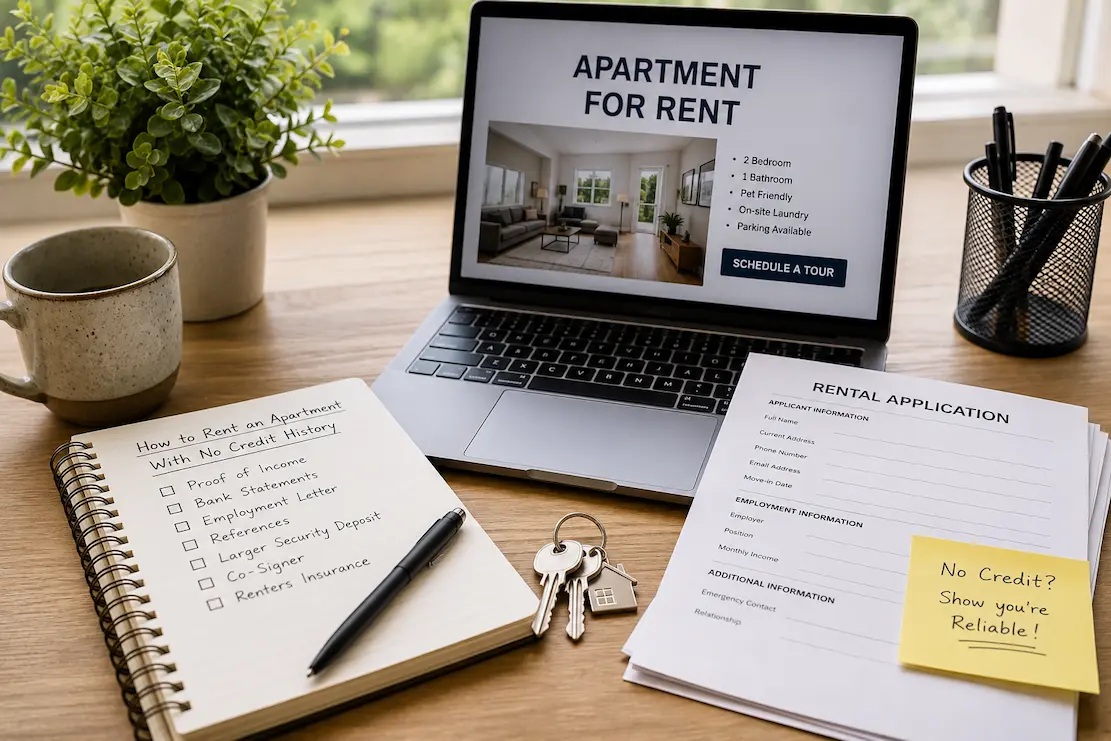
Landlords have a simple screening formula: credit score above threshold, income three times rent, clean background check, approved. When you don’t have a credit history, you don’t fit the formula. Most landlords won’t rewrite their process for one applicant. Your job isn’t to change their system — it’s to give them confidence that bypassing the credit check won’t cost them money or headaches.
This applies broadly. Recent immigrants building credit from scratch. College students who’ve never borrowed. People who’ve always paid cash. Divorcees whose credit was tied to a former spouse. The recently discharged from bankruptcy starting over. Each group faces the same wall, but the tools to climb it are more available than most realize.
Why Landlords Care So Much About Credit
Credit history isn’t about judgment. It’s about data. A landlord with fifty applications for ten units needs a fast, objective filter. Credit scores summarize years of payment behavior into a three-digit number that predicts default risk with reasonable accuracy.
Someone with no credit history isn’t automatically high-risk. They’re unknown-risk. The landlord can’t distinguish between a responsible person who’s never borrowed and a person who’s hiding a disastrous history. Your task is providing alternative evidence that tips the scale toward “responsible.”
What I Learned the Hard Way: At twenty-two, fresh out of college with no credit cards and no loans, I applied to twelve apartments in one week. Every single landlord rejected me or demanded a cosigner I didn’t have. The thirteenth landlord asked why I had no credit. I explained I’d always paid cash, worked since sixteen, and had $8,000 in savings. She asked for three months of bank statements, my employment letter, and a reference from my college housing director. I got the apartment. The difference wasn’t my finances — it was finding someone willing to look beyond the score.
Alternative Documentation That Actually Works
When credit history is absent, other documents can demonstrate reliability. The key is organization and presentation. Walk in with a folder, not a story.
Proof of income: This is non-negotiable. Landlords want assurance you can pay. Bring pay stubs from the last three months, an offer letter stating your salary if newly employed, or tax returns if self-employed. If your income is irregular (tips, commissions, gig work), show six months of consistent deposits. Pattern matters more than amount.
Bank statements: Three to six months showing regular income deposits and responsible spending. Large unexplained cash deposits raise flags. Consistent saving behavior — even modest amounts — signals financial discipline.
Rental history references: Previous landlords, on-campus housing directors, or property managers who can confirm you paid on time and left units in good condition. Written references beat phone calls because landlords can file them. If you’ve never rented, a reference from an employer or professor who knows your character helps, though it’s weaker than actual housing history.
Utility payment history: Some utility companies report to credit bureaus. Even if yours doesn’t, twelve months of on-time utility payments in your name demonstrates payment reliability. Print the statements. Highlight the payment dates.
| Document Type | What It Proves | How Many Months | Strength Rating |
|---|---|---|---|
| Pay stubs / offer letter | Stable income source | 3 months (or letter) | Essential |
| Bank statements | Cash flow management, savings discipline | 3–6 months | Strong |
| Rental references | Payment history, property care | Previous landlord contact | Very strong |
| Utility payment history | Consistent bill payment | 12 months | Moderate |
| Employment verification | Job stability, income confirmation | Current letter | Essential |
| Savings account balance | Financial cushion, emergency preparedness | Current statement | Strong |
Money Talks: Financial Leverage Strategies
When documentation isn’t enough, money can bridge the gap. These strategies cost more upfront but unlock doors that would otherwise stay closed.
Larger security deposit: Most states cap security deposits at one or two months’ rent. Offering the maximum legal amount demonstrates skin in the game. In competitive markets, some landlords accept additional prepaid rent beyond the deposit cap, though this varies by state law. Check local regulations before offering.
First and last month plus deposit upfront: Paying three months at lease signing reduces the landlord’s risk substantially. It shows liquidity and commitment. Only do this if you can genuinely afford it without draining your emergency fund.
Automatic rent payments: Setting up auto-transfer from your bank account on the first of each month removes the landlord’s collection risk. Some landlords will accept this arrangement in lieu of strong credit, especially if combined with a slightly higher deposit.
Guarantor or cosigner: A parent, relative, or close friend with established credit signs the lease alongside you. They become legally responsible if you default. This is the most common workaround for students and recent graduates. The guarantor typically needs income four to five times the monthly rent and strong credit. Be transparent about what you’re asking — a cosigner is on the hook for your entire lease term, sometimes longer if you don’t properly terminate.
Pro Tip: If using a guarantor, ask whether the landlord will release them from obligation after 12 months of on-time payments. Some will agree if you build payment history and establish your own credit during that first year. Get it in writing. A verbal promise evaporates when the original signer wants off the lease.
Where to Look: Landlords Who Flex
Not all landlords use identical screening. Corporate property management companies typically have rigid, automated systems that reject anyone below credit thresholds. Individual landlords — often called “mom and pop” owners — have more discretion.
Individual owners: Search Craigslist, Facebook Marketplace, local classifieds, and “for rent by owner” sites. These landlords manage one to five properties personally. They meet applicants face-to-face, hear explanations, and sometimes value character references over credit scores. The trade-off: less professional maintenance and fewer legal protections in some cases.
Sublets and lease takeovers: Taking over someone’s existing lease often bypasses full credit screening. The original tenant did the heavy lifting. You assume their lease with landlord approval, which is sometimes perfunctory. Check sites like Leasebreak, Flip, and local housing Facebook groups.
Roommate situations: Moving into an established household where one roommate holds the lease and you pay them directly avoids landlord screening entirely. The existing leaseholder assumes the risk. This works best when you know the person or have strong mutual connections. Stranger roommate situations require caution — verify the primary tenant actually has permission to sublet and that your payments are documented.
Corporate “second chance” programs: Some large apartment chains offer programs specifically for applicants with poor or no credit. They typically require higher deposits, shorter initial lease terms, or automatic payment enrollment. Search terms like “no credit check apartments” plus your city, but verify legitimacy — scams target desperate renters.
Building Credit While You Search
The long-term solution to no credit history is building one. Several tools work even before you have an apartment.
Secured credit cards: You deposit $200–$500 as collateral, receive a card with that limit, and use it for small purchases you pay off monthly. After 6–12 months of responsible use, many issuers graduate you to an unsecured card and return your deposit. The payment history reports to all three credit bureaus.
Credit-builder loans: Offered by credit unions and some online lenders. You “borrow” a small amount that sits in a locked savings account. You make monthly payments, which are reported as loan payments. At the end of the term, you receive the accumulated amount minus minimal interest. It’s forced saving that builds credit.
Experian Boost and similar services: These programs add utility, phone, and streaming service payments to your credit file. They only affect your Experian score (not Equifax or TransUnion), but that single score improvement sometimes tips landlord decisions. Free to use, though the data sharing raises privacy considerations.
Authorized user status: A family member with excellent credit adds you as an authorized user on their long-standing credit card. Their positive history appears on your report. You don’t need to use the card or even possess it. The risk is minimal to you but real to them — your misuse affects their account. Establish clear boundaries.
Reality Check: Building credit takes months, not weeks. A secured card opened today won’t help you rent next month. Start building credit immediately upon realizing you’ll need it — ideally six months before apartment hunting. The applicants who struggle most are those who wait until rejection forces the issue.
Red Flags to Avoid
Desperation makes people vulnerable. Watch for these warning signs:
— Landlords who won’t show the unit in person or demand payment before you’ve seen it
— Listings with prices dramatically below market rate for the neighborhood
— Requests for wire transfers, gift cards, or cryptocurrency as deposits
— Pressure to sign immediately without reviewing the lease
— Landlords who claim to be “out of the country” and can’t meet face-to-face
— No written lease or vague verbal agreements about terms
Legitimate landlords have no problem with you viewing the property, reviewing the lease, and paying through traceable methods. Anyone rushing you or requesting untraceable payment is likely a scammer.
Related Articles
- How to Choose Between Federal and Private Student Loans
- Working During College Without Hurting Your Grades
- Managing Money When Studying Abroad for a Semester
- How to Refinance Student Loans for Better Rates
- Finding Affordable Textbooks Every Single Semester
- How to Handle Finances When Taking a Gap Year
- Preparing for Student Loan Repayment Before Graduation
- Understanding Co-Signed Loans and Your Responsibilities
- Building a Household Budget That Everyone Can Follow
- How to Build Savings While Paying Off Existing Debt
Sources and References
- Consumer Financial Protection Bureau. “Checklist for Renting an Apartment.” ConsumerFinance.gov, 2023.
- Federal Trade Commission. “Tips for Renting an Apartment.” Consumer.FTC.gov.
- Experian. “How to Rent an Apartment With No Credit History.” Experian.com, 2024.
- Nolo. “State Security Deposit Limits and Deadlines.” Nolo.com.
- Consumer Financial Protection Bureau. “Building Credit From Scratch.” ConsumerFinance.gov.
- MyFICO. “Understanding FICO Scores.” MyFICO.com.
This article was written after watching too many capable people — immigrants, students, divorce survivors — assume a missing credit score meant homelessness or substandard housing. It doesn’t. No credentials claimed — just a belief that alternative paths exist for those willing to document their reliability and ask the right questions.

The Interest-Story Editorial Team creates practical financial guides covering budgeting, saving, debt, credit, side income, student finance, and everyday financial planning. Our content is written to make complicated financial topics easier to understand, with information organized around real-life questions and decisions. We use reliable sources for facts that can change over time and encourage readers to verify important financial, legal, and government requirements with the appropriate official organization. Our goal is straightforward: provide useful information that helps readers understand their options and make more informed financial decisions.