
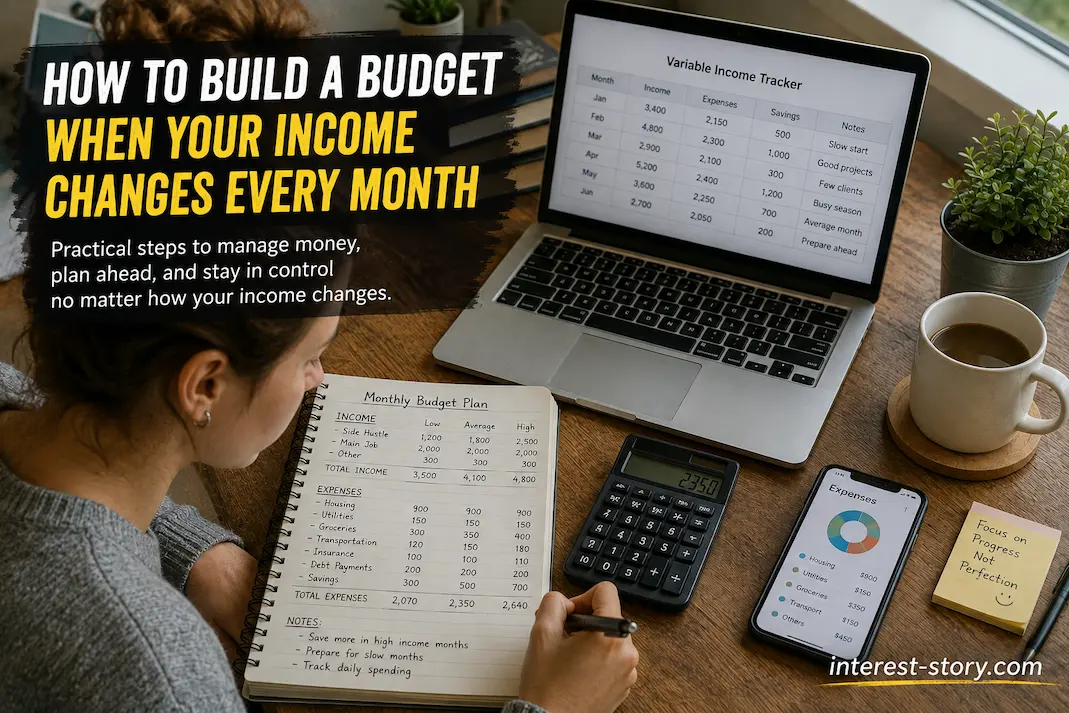
Knowing how much money is in your bank account each month can be reassuring. Daily accounts, automatic savings programs, and a predictable long-term schedule are all easy to achieve. However, millions of people have very diverse income streams. Self-employed individuals, seasonal workers, commission salespeople, taxi drivers, small business owners, and many part-time employees rarely earn the same amount per month.
It can be frustrating to incorporate unexpected income into your monthly budget. In good months, it seems as if you have more money than you can spend. In bad months, the budget becomes unmanageable. Many people eventually give up on budgeting after a few rounds.
This is not the case. When your income fluctuates, budgeting strategies designed for a stable income are often the problem. Dealing with income fluctuations requires a completely new mindset. Instead of predicting where every cent goes, build a flexible system that works effectively regardless of the month’s income.
Stop Considering “Average” Months
When income fluctuates, it is often recommended to first determine your average monthly income and base your budget on that. This approach seems logical, but it often leads to problems. Imagine earning €3,000 one month, €5,000 the next, and only €2,800 the month after that. Averages seem reassuring, but they are useless if income is below average. Months with lower income can be particularly stressful if you expect expenses to remain normal.
Instead of relying on the average, also estimate your income during periods of lower income. The key is to develop a financial strategy that works effectively during periods of reduced turnover, fewer overtime hours, or seasonal fluctuations in demand, rather than anticipating the worst. Months with higher income offer opportunities to improve your finances, not an excuse to spend more.
Categorize Expenses into Two Categories
Income instability makes it crucial to distinguish between unavoidable expenses and fixed monthly expenses. The first category comprises fixed expenses. Regardless of income, costs for housing, utilities, insurance, loan repayments, internet, and other necessary expenses must be paid.
The second category comprises flexible expenses. Eating out, entertainment, clothing, hobbies, travel, and discretionary spending can be adjusted to your financial situation in that month. This way of looking at expenses can reduce budgeting pressure. In months with higher income, you have more flexibility in your expense categories. Because you know which expenses can be adjusted flexibly, it is also easier to make corresponding adjustments during periods of lower income.
Build Your Budget in Layers Instead of One Fixed Number
People with stable salaries often work from one monthly spending plan. Variable income households usually benefit from something more flexible. Think of your budget as having three financial layers rather than one fixed version.
| Income Layer | Purpose |
|---|---|
| Essential Income | Covers housing, food, transportation, utilities, insurance, and other necessary expenses. |
| Comfortable Income | Allows for additional savings, planned purchases, family activities, or discretionary spending. |
| Exceptional Income | Supports larger financial goals such as building savings, reducing debt, investing for long-term objectives, or preparing for slower earning periods. |
This layered approach reduces the emotional ups and downs that often accompany changing income. Instead of feeling disappointed when earnings vary, you already know how each level of income will be used before the month begins.
Let Strong Months Prepare You for Quiet Ones
One of the most significant differences between budgeting with fixed income and budgeting with variable income is the role of higher-earning months. When income increases unexpectedly, it’s tempting to assume future months will look similar. New spending habits develop easily during these periods because higher earnings begin to feel normal. The challenge appears when income returns to more typical levels while those new expenses remain.
A more sustainable approach is to treat stronger months as opportunities to prepare for future uncertainty. Extra income can help strengthen emergency savings, cover future bills, or reduce financial pressure during slower periods. This doesn’t mean every additional dollar should be saved. Enjoying the results of hard work is perfectly reasonable. The key is making intentional decisions instead of allowing temporary income to permanently reshape your monthly obligations.
Pay Yourself Consistency Instead of Chasing Consistency
Business owners sometimes pay themselves a regular amount from business income rather than withdrawing everything they earn immediately. A similar idea can be useful for individuals whose income changes significantly from month to month.
Rather than allowing personal spending to rise and fall with every paycheck, consider creating greater stability whenever possible. During higher-income months, setting aside part of the additional earnings may help maintain more predictable finances during quieter periods. This approach won’t eliminate income fluctuations, but it can reduce the feeling that every month requires starting over. Over time, smoother cash flow often makes budgeting feel much less stressful.
Irregular Bills Deserve Their Own Planning System
Monthly budgets often focus on recurring expenses, but households with changing income need to pay particular attention to costs that appear only occasionally. Property taxes, vehicle registration, annual insurance premiums, holiday spending, school expenses, professional memberships, and home maintenance don’t disappear simply because income is lower during a particular month.
Instead of treating these as surprises, estimate when they will occur and gradually prepare for them throughout the year. Stronger earning months often provide valuable opportunities to reserve money for these future obligations, reducing pressure when they eventually arrive. Planning for irregular expenses also prevents them from disrupting your regular monthly budget whenever income happens to be lower than expected.
Review Income More Frequently Than Your Budget
People with regular salaries often review their budgets once each month because income follows a predictable pattern. Variable income usually benefits from a different routine. Instead of asking only, “Did I stay within budget this month?” ask questions throughout the month as income arrives.
- How much has been earned so far?
- Are essential expenses already covered?
- Has this become a stronger month than expected?
- Should additional income strengthen savings rather than increase spending?
These regular check-ins allow your financial decisions to adapt naturally instead of waiting until the end of the month to discover that circumstances changed weeks earlier.
Create Financial Priorities Before the Money Arrives
When income is unpredictable, every payment can feel like a fresh decision. Without clear priorities, it’s all too simple to spend according to whatever seems most urgent that day rather than what matters most over the long term. One way to avoid such confusion is to decide in advance how each incoming payment will be used. Instead of asking yourself, “What should I do with this money?” every time you get paid, establish an order of priorities that remains consistent regardless of the amount.
For example, your first priority might always be essential household expenses. After you cover those, you can strengthen savings, prepare for upcoming bills, or set aside money for personal goals. If additional income arrives beyond those needs, it can support discretionary spending or future plans. Having these priorities already established removes much of the uncertainty that comes with variable earnings and reduces the pressure to make financial decisions in the moment.
Don’t Expect Every Month to Look Successful
One reason people become discouraged with irregular-income budgeting is that they judge every month by the same standard. A slower month may feel like failure simply because it doesn’t resemble a stronger one. A healthier approach is to evaluate your finances over a longer period. If your essential expenses are consistently covered, your savings gradually improve, and your financial goals continue moving forward, occasional lower-income months don’t necessarily indicate that your budget has stopped working.
This perspective is especially helpful for people whose work naturally follows seasonal patterns. Many industries experience predictable busy and quiet periods throughout the year. Measuring success across several months instead of focusing on one paycheck often provides a much more accurate picture of financial progress.
Keep Personal and Work-Related Spending Separate
For freelancers, contractors, and small business owners, personal and business finances often intertwine. A work-related purchase might come from a personal account, while business income might immediately cover household expenses, with no clear separation. Although such an arrangement may seem convenient, it often makes budgeting much more difficult. When you mix personal and work-related transactions together, it becomes harder to understand how much income is truly available for household spending.
Even if you operate on a small scale, developing the habit of separating business and personal money wherever practical can improve financial clarity. It becomes easier to track earnings, prepare for taxes, evaluate business performance, and build a household budget based on money that is genuinely available for personal use.
Prepare for Slow Months Before They Arrive
People with changing income often know from experience that certain times of the year are quieter than others. The challenge isn’t usually the slow season itself—it’s reaching that period without preparing for it. Instead of viewing higher-income months as an opportunity to permanently increase spending, consider them to be preparation for future periods when earnings may temporarily decline. Setting aside part of stronger income can reduce stress later and help maintain greater stability throughout the year.
This approach also makes financial planning feel less reactive. Rather than scrambling to reduce expenses every time income slows, you’ve already anticipated those quieter periods and built them into your overall plan.
Your Budget Should Change as Your Work Changes
Variable income rarely stays unpredictable in exactly the same way forever. As careers develop, businesses grow, or new clients become more consistent, earning patterns often become easier to predict.
For that reason, your budget shouldn’t remain unchanged year after year. A system that worked when you were just starting a freelance career may no longer suit your finances after your income becomes more stable. Likewise, someone moving from full-time employment into self-employment may need an entirely different budgeting approach than before. Reviewing your financial plan every few months allows it to evolve alongside your career rather than continuing to reflect circumstances that no longer exist.
A Monthly Variable-Income Review
Instead of comparing your actual income with one fixed expectation, consider reviewing each month using questions like these.
| Review Area | Questions to Consider |
|---|---|
| Income | Was this month lower, typical, or stronger than expected? |
| Essential Expenses | Were all necessary bills covered comfortably? |
| Flexible Spending | Did discretionary expenses match the month’s income? |
| Future Planning | Was money reserved for upcoming irregular expenses? |
| Savings | Did stronger income improve long-term financial security? |
| Next Month | Are there known changes that should influence the next budget? |
Completing a review like this takes only a short time but helps ensure that each month’s financial decisions support the next one rather than treating every month as an isolated event.
Progress Is Measured by Stability, Not Perfect Consistency
People with an irregular income may compare themselves to friends or coworkers who get the same salary each month. That comparison can create false expectations, as the financial issues are distinct in nature.
Success is not judged by having the same amount of money in your bank account month after month. It is measured by constructing a system that is resilient to varying conditions. If your budget helps your household to pay critical expenses, to be ready for future responsibilities, to recover from slower earning periods, and to keep working towards long-term goals, it is accomplishing precisely what it was supposed to do. Financial stability does not require revenue to be entirely predictable. It needs a plan that is adaptable to respond when income fluctuates.
Conclusion
When you have variable income, building a budget is a different kind of exercise than standard monthly budgeting. Try to build a system that adjusts itself spontaneously when earnings go up and down, instead of pushing the changing earnings to fit into a fixed spending plan. By budgeting for a steady income, separating needs from wants, preparing for the unexpected bills, and using stronger months to assist weaker months, you’re creating a budget that works with the reality of your job, not against them.
Most essential, remember that an effective budget isn’t one that forecasts every paycheck exactly. It’s the kind of tool that lets you make solid financial decisions whether this month’s salary is bigger, smaller or just what you expected. That flexibility becomes one of the most powerful financial skills you can build over time, allowing your budget to expand with your career and continue supporting your goals despite shifting circumstances.

The Interest-Story Editorial Team creates practical financial guides covering budgeting, saving, debt, credit, side income, student finance, and everyday financial planning. Our content is written to make complicated financial topics easier to understand, with information organized around real-life questions and decisions. We use reliable sources for facts that can change over time and encourage readers to verify important financial, legal, and government requirements with the appropriate official organization. Our goal is straightforward: provide useful information that helps readers understand their options and make more informed financial decisions.