
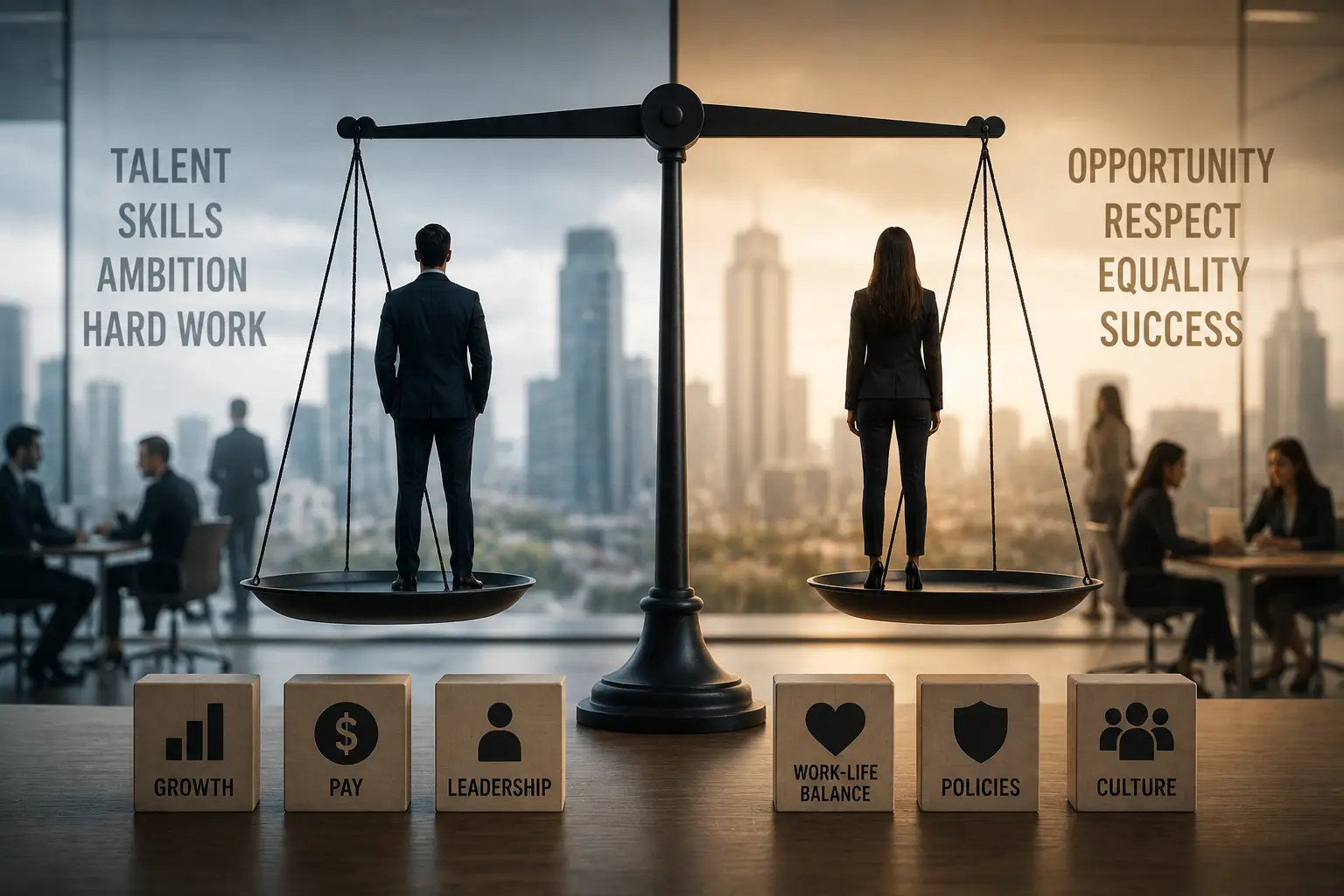
For a long time, many people believed society was slowly moving toward complete equality in professional life. The idea sounded simple: work hard, become skilled, and success will depend only on talent and effort. Reality turned out to be much more complicated.
Today, conversations about gender and career success often become extremely emotional because people usually approach the topic from opposite extremes. Some insist discrimination barely exists anymore and that modern workplaces are already fair. Others believe gender completely determines professional opportunities and career growth. Honestly, I think both perspectives miss part of the picture.
Gender absolutely can influence career experiences, salaries, promotions, workplace expectations, and leadership opportunities. At the same time, the situation is far more nuanced than many internet arguments suggest. The reality changes depending on:
- country,
- industry,
- company culture,
- social expectations,
- economic conditions,
- education systems,
- and even personality.
Some workplaces genuinely became far more equal over time. Others still struggle with serious bias, even if that bias is less visible than before.
Gender Bias Often Became More Subtle, Not Necessarily Disappeared
One important thing that changed over the years is that discrimination in many developed countries became less direct and more difficult to detect.
In the past, inequality was often obvious:
- women openly excluded from leadership,
- hiring restrictions,
- unequal legal rights,
- lower educational access.
Today, the situation is usually more subtle.
For example:
- men may feel pressure to appear emotionally tougher,
- women may face stronger appearance-related judgment,
- leadership qualities may be interpreted differently depending on gender,
- certain industries may unconsciously favor one gender culturally.
Researchers from Harvard Business School have discussed how unconscious bias can influence hiring, leadership evaluation, and promotion decisions even when organizations officially support equality.
This is one reason modern discussions about discrimination became more complicated. Many biases today operate psychologically and culturally rather than legally.
Leadership Expectations Are Often Different for Men and Women
One thing I find particularly interesting is how differently society sometimes reacts to the same behavior depending on gender.
For example:
- an assertive man may be described as confident,
- an assertive woman may be described as aggressive.
At the same time:
- an emotionally sensitive man may be judged as weak,
- while emotional intelligence may be more socially acceptable for women.
These expectations create different kinds of pressure for different people.
Research from Catalyst has explored how gender stereotypes affect leadership perception in workplaces.
Honestly, I think many people underestimate how strongly social expectations shape professional behavior long before hiring even begins.
Some Industries Remain Strongly Gendered
Although many industries became more balanced, some fields still remain heavily dominated by one gender.
For example:
- engineering and technology often remain male-dominated,
- nursing and early childhood education are often female-dominated,
- construction and physical labor industries remain overwhelmingly male,
- beauty and fashion industries often place greater pressure on women.
The reasons behind this are debated constantly. Some people argue these differences mainly come from cultural expectations and socialization. Others believe biological tendencies also influence career preferences to some extent. In reality, it’s probably a combination of many factors rather than one simple explanation.
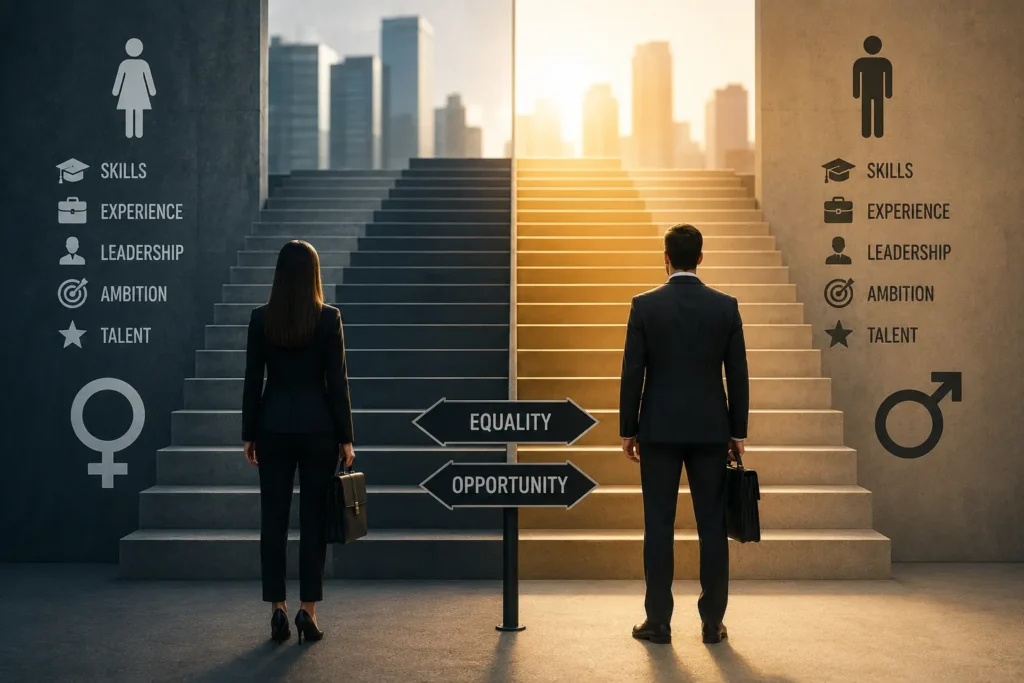
Large Companies Are Now Extremely Careful About Gender Policies
One major shift over the last decade is how aggressively large international companies started addressing diversity and equality publicly.
Companies such as:
- Microsoft
- Apple
- Meta
now openly publish diversity reports, workplace equality goals, and hiring statistics.
Many corporations created policies involving:
- equal pay initiatives,
- anti-discrimination training,
- maternity and paternity leave,
- diversity hiring goals,
- reporting systems for workplace harassment.
Part of this comes from genuine cultural progress. Part also comes from public pressure and reputation management. Modern companies understand that workplace culture directly affects branding, recruiting, and investor perception.
Source:
Governments Handle Gender Equality Very Differently
The situation also changes dramatically depending on the country. Nordic countries like Sweden and Norway are often considered among the strongest supporters of workplace gender equality. These countries heavily support:
- parental leave,
- childcare systems,
- equal pay policies,
- work-life balance.
Meanwhile, some countries still have much more traditional workplace structures and stronger cultural expectations regarding gender roles.
In some places:
- women may face limited career advancement,
- men may face stronger pressure to become primary financial providers,
- family expectations may strongly influence career decisions.
This is why global discussions about gender can become confusing. Experiences vary enormously across societies.
The Internet Sometimes Oversimplifies the Entire Discussion
Honestly, I think online conversations about gender often become unproductive because people try to reduce extremely complex social systems into simple slogans. Real life is rarely that simple.
Some men absolutely face pressure and discrimination in certain environments. Some women absolutely face barriers and unfair treatment too.
At the same time, individual factors also matter enormously:
- education,
- personality,
- communication skills,
- emotional intelligence,
- networking,
- discipline,
- confidence,
- economic background.
Gender influences opportunities, but it is not the only factor shaping success.
I think people become too extreme when they pretend either:
- gender changes nothing,
or - gender determines everything.
Neither statement fully matches reality.
Appearance and Gender Often Intersect
One uncomfortable reality is that appearance standards are frequently tied to gender expectations too.
Women in many professional environments may experience stronger pressure related to:
- attractiveness,
- age,
- presentation,
- clothing,
- behavior.
At the same time, men often experience pressure involving:
- status,
- confidence,
- financial success,
- emotional control,
- leadership image.
These pressures can affect careers psychologically even when nobody openly talks about them.
Social expectations shape workplace behavior more than many organizations admit publicly.
Modern Workplaces Are Changing Rapidly
One positive thing is that workplace culture is evolving quickly in many industries. Remote work, digital businesses, global hiring, and online entrepreneurship reduced some traditional barriers. Skills became easier to demonstrate publicly through:
- portfolios,
- content creation,
- independent projects,
- freelancing,
- startups,
- remote collaboration.
In many digital industries today, measurable performance matters more than old corporate structures. That doesn’t mean bias disappeared completely. But professional opportunities became more accessible in some ways than they were decades ago.
The Goal Is Probably Fairness, Not Sameness
I honestly think one of the biggest misunderstandings in modern discussions is the confusion between equality and sameness. People are different. Interests are different. Strengths are different. Preferences are different.
The goal of healthy professional systems should probably be fairness of opportunity rather than forcing identical outcomes everywhere. That’s a difficult balance, and no country has solved it perfectly yet.
Final Thoughts
Yes, gender can still influence career success, workplace treatment, salaries, leadership opportunities, and professional expectations. Research and real-world experiences both support that reality.
At the same time, the situation became far more complicated than simple discrimination narratives from the past. Modern workplaces involve a mix of:
- cultural expectations,
- unconscious bias,
- social pressure,
- economic systems,
- company policies,
- and individual differences.
Personally, I think the healthiest approach is acknowledging that inequality can still exist without reducing every professional outcome entirely to gender alone. Because in the real world, success is usually shaped by many overlapping factors at the same time.
Written by Garegin
See also:
how appearance influences professional opportunities






Leave feedback about this