
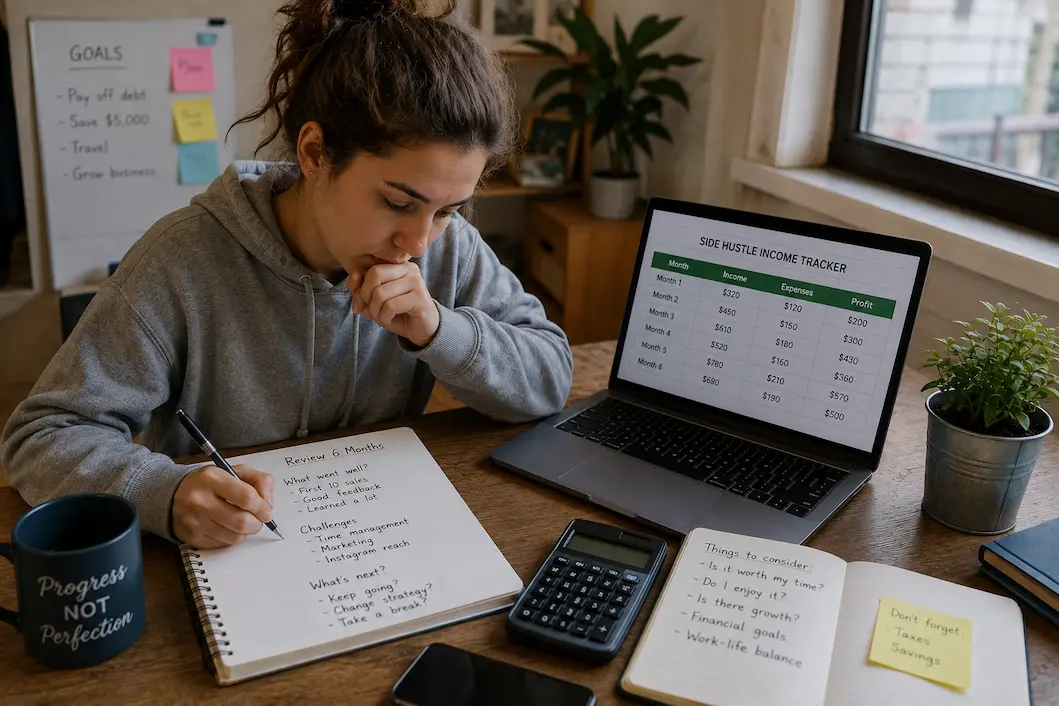
Six months can pass surprisingly quickly when you’re building a side hustle. At the beginning, everything feels new. Landing the first customer is exciting. Every order, inquiry, or payment feels like proof that the idea might actually work. It’s easy to stay motivated because every small milestone feels like progress. Half a year later, things usually look different. The excitement has settled into routine. You’re no longer wondering whether you can run a side hustle—you already are. The question becomes more practical: Should you keep going?
That isn’t always an easy question to answer. Some side hustles don’t generate much income during the first few months but gradually become more consistent over time. Others start strongly before slowing down as demand changes or personal circumstances shift. There are also projects that continue earning money but require so much time and energy that they no longer feel worthwhile. Reaching the six-month mark isn’t necessarily a sign that your side hustle has succeeded or failed. It’s simply a good moment to pause, look back honestly, and decide whether it still deserves a place in your life.
Stop Measuring Success by Income Alone
When people evaluate a side hustle, income is usually the first number they look at. That’s understandable. After all, earning extra money is often one of the main reasons people start in the first place. But six months provides enough experience to ask questions that go beyond earnings. Has the work become easier because you’ve developed better systems? Are customers returning, or are you constantly searching for new ones? Have you learned skills that could benefit your career or future opportunities? Do you enjoy the work enough to imagine the slowdowng it another six months from now?
Imagine two people earning exactly the same amount. One spends every weekend feeling stressed, constantly chasing deadlines and struggling to balance work with personal life. The other has built a routine that fits comfortably around existing commitments and genuinely enjoys serving clients. Their income may look identical. Their experiences are completely different. Looking only at earnings can hide factors that ultimately determine whether a side hustle is sustainable.
Time Is Part of the Investment Too
Unlike money, time can’t be replaced once it’s gone. Many people begin a side hustle thinking mainly about financial investment. They carefully track software subscriptions, equipment purchases, advertising costs, or materials. What they rarely measure is how many evenings, weekends, and personal hours gradually become part of running the business. After six months, you probably have a clearer picture of that commitment.
Perhaps client messages regularly arrive during family dinners. Maybe your Saturdays are now spent packaging products or editing content instead of relaxing. Or perhaps you’ve found a rhythm where the work fits naturally into your schedule without making life feel rushed. None of these situations automatically mean the side hustle is worth keeping—or that it isn’t. The important question is whether the time you’re investing still feels proportionate to what you’re receiving in return, whether that’s income, professional growth, enjoyment, or future opportunities. A side hustle should support your life, not quietly replace it.
Not Every Side Hustle Is Meant to Grow Quickly
It’s easy to compare your progress with stories shared online. One creator reaches thousands of followers within months. Another freelancer quickly replaces their full-time salary. A small online shop suddenly goes viral. Those stories are real. They’re also incomplete. Most side hustles develop much more gradually. They gain customers through recommendations, improve little by little, and become more efficient as experience grows. Progress isn’t always dramatic enough to notice from one week to the next, but looking back over six months often reveals meaningful improvements. Instead of asking whether your side hustle has become highly profitable, consider whether it’s moving in a positive direction.
- Are you solving problems more efficiently than when you started?
- Do clients trust your work more than they did a few months ago?
- Have you become faster, more confident, or more organized?
Growth isn’t always measured by bigger numbers. Occasionally it’s reflected in becoming better at what you do.
A Slow Season Doesn’t Always Mean It’s Time to Quit
Every side hustle has periods that feel encouraging and others that test your patience. A freelancer may notice fewer client inquiries during certain months. Someone selling handmade products might experience quieter sales outside holiday seasons. A content creator may spend weeks producing work before seeing any noticeable increase in audience engagement. These situations can easily make it seem as though the side hustle has stopped moving forward.
Before deciding it’s no longer worth your time, try searching for patterns instead of isolated moments. Has interest gradually declined over several months, or is this simply a temporary slowdown? Are customers disappearing, or has your schedule changed in a way that makes progress feel slower? Looking at the broader picture often leads to a more balanced decision than reacting to one disappointing month. Patience shouldn’t excuse ignoring real problems, and a temporary setback should not convince you that your efforts are worthless.
Sometimes Your Life Changes More Than the Side Hustle
When people review a side hustle after six months, they often focus entirely on the business. Just as important is asking whether your own circumstances have changed. Perhaps you’ve started a new full-time job that leaves less spare time. Maybe your studies have become more demanding, family responsibilities have increased, or your financial priorities look different from when you first began. A side hustle that fit comfortably into your schedule six months ago may now compete with parts of life that need more attention.
That doesn’t automatically mean the business has failed. It may simply mean the role it plays in your life needs to change. Some people reduce their workload instead of stopping completely. Others pause new projects for a while before returning later. There are also those who decide that their current stage of life simply requires a different balance. Reviewing a side hustle isn’t only about measuring its performance. It’s also about deciding whether it still fits the person you’ve become over the past six months.
Before You Decide, Ask Yourself Three Honest Questions
Big decisions often become clearer when you reduce them to a few straightforward questions.
Instead of focusing only on profit, consider these:
- If this side hustle earned the same amount over the next six months, would I still want to continue?
- Am I becoming better at what I do, or am I repeating the same effort without meaningful progress?
- Does this work still support my personal and financial goals, or am I continuing simply because I’ve already invested time in it?
These questions don’t produce identical answers for everyone. For one person, modest income may still feel worthwhile because the work is enjoyable and creates valuable experience. For another, the same results may no longer justify the time required. Being honest with yourself is often more helpful than comparing your journey with someone else’s.
Ending One Chapter Can Make Room for Another
Some people think that quitting a side job is proof that the main idea wasn’t good enough. That’s not true. A lot of successful business owners, freelancers, and creators have quit projects that weren’t working out for them or their goals. It wasn’t important that they stopped; what mattered was that they knew why they stopped. If you look back and see that the side job is steadily getting better, fits well into your schedule, and is still helping you reach your financial goals, then you may want to keep doing it.
Letting go of something can also be a smart financial move if it drains your energy regularly, keeps you from focusing on more important opportunities, or is no longer in line with your goals. When you look back at your progress after six months, it’s not to show that you were right or wrong when you started. It means to make your next choice with more information than you had on the first day. Sometimes the best thing that can happen is to keep going with more confidence. Sometimes it’s about using everything you’ve learned to get a better chance. Both show that things are getting better.
FAQs
1. Should you judge a side job after six months?
Six months is usually enough time to figure out if the side job still fits your personal and financial goals, how much work you have to do, how consistent you are, how interested customers are, and if it’s making you money.
2. Should I keep a part-time job that doesn’t pay much?
More than just income plays a role in that. Getting more professional experience, learning new skills, enjoying the work, and making chances for the future may also affect the decision of whether to keep going.
3. How can I tell if my side job is just growing slowly?
Usually, it’s better to look at trends over a few months than to judge one busy or slow period. Even if income grows slowly, steady improvement in skills, customer relationships, or reliability can be a sign of progress.
4. Is giving up a side job a sign of failure?
Not all the time. It’s sometimes a reasonable idea to stop working on a project so that you can put your time, energy, and resources into other chances that are more in line with your current goals and needs.

The Interest-Story Editorial Team creates practical financial guides covering budgeting, saving, debt, credit, side income, student finance, and everyday financial planning. Our content is written to make complicated financial topics easier to understand, with information organized around real-life questions and decisions. We use reliable sources for facts that can change over time and encourage readers to verify important financial, legal, and government requirements with the appropriate official organization. Our goal is straightforward: provide useful information that helps readers understand their options and make more informed financial decisions.