
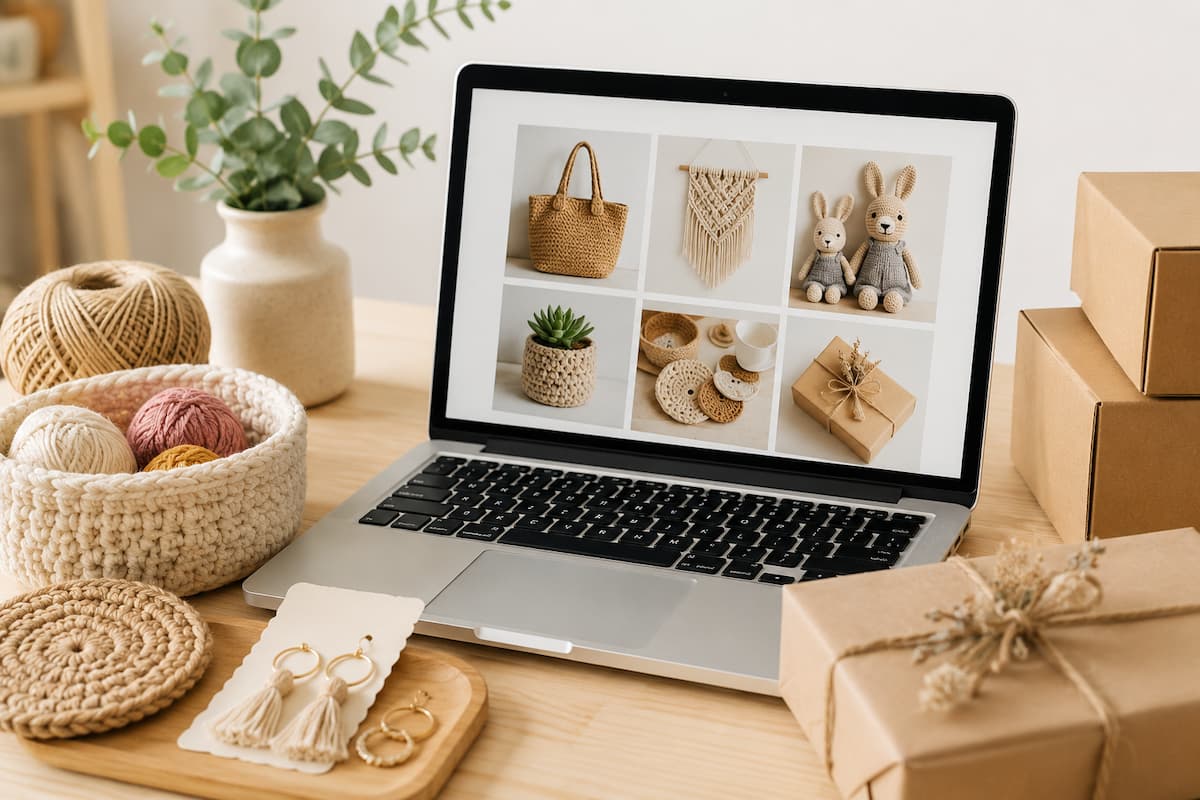
Step by step, transform your artistic hobby into an online business. Handicrafts are unique; whether it involves knitting scarves, making candles, carving wooden spoons, or painting with watercolors, the creative process itself is fun. Why not turn that joy into income? One of the best ways to showcase your talent and create unique pieces is by selling handmade products online. If you are a beginner and the idea seems overwhelming, don’t worry. I have also stared blankly at half-finished handicrafts and wondered if anyone would actually buy them. Starting an online business selling handmade products is much easier than you think; you don’t need a business degree or a warehouse full of materials. I will guide you through all the steps, from choosing your first product to closing your first sale, in a relaxed and enjoyable way, just like chatting with a friend.
Finding your Ideal Handmade Product
The most important step in selling handmade products online is choosing what you want to sell. Many beginners make the mistake of wanting to do everything at once. I recommend starting with something you thoroughly enjoy making. Think about your current hobbies. Do you like relaxing with clay? Do you completely lose track of time when you are sewing? The most beautiful handmade products are made with love; that is obvious. Customers feel your passion for your work. Take a look at the items in your home. Perhaps your drawers are overflowing with hand-painted greeting cards or beaded bracelets that your friends are always so enthusiastic about. These are all sources of inspiration.
Another good approach is to see how you can meet practical needs. A handmade storage bag might be a nice idea for busy mothers. Pet owners might appreciate unique collar tags. The perfect moment is when your skills happen to align with a specific need. Don’t rush to perfection. Your first attempts might not look like they belong on the cover of a magazine, but that is fine. Every expert starts from scratch, and the only way to improve is by continuously creating.
Choosing the Right Selling Platform
The next important question is: Where do you sell your products? The internet is teeming with platforms. Etsy is perhaps the best known, and rightly so. It is a marketplace for handmade products, antiques, and artisanal items, so customers are already looking for what you sell. Opening a shop on Etsy and listing your first product takes less than an hour. Etsy charges listing fees and a commission on sales, so keep this in mind. If you want more control over your brand, you can build a Shopify or Big Cartel website. These platforms can help you create a beautiful shop without having to compete with other sellers.
However, you do have to attract customers yourself, which takes time and effort to promote. Amazon Handmade has a huge buyer base, but the registration process is stricter and the costs are higher. I recommend Etsy for beginners, because you can learn there without having to worry about visitor numbers. Once you have gained some experience and customers, you can create your own website at any time.
The Magic of Photography
It took me a long time to realize that beautiful photos can effectively boost sales of handmade products. Even the most beautiful product does not do justice to itself if the photo is dark, grainy, or messy. You don’t need an expensive camera to take great product photos. Most mobile phones have excellent cameras. The key is lighting. Sunlight is the best option. Try taking photos by a large window in the soft, golden light of the early morning or late afternoon. Turn off your camera’s flash and avoid harsh shadows and strange colors. Arrange the photos carefully to help buyers imagine how they would use the product.
For example, show handmade soap on a clean bathroom counter with a beautiful towel. Show customers what jewelry looks like on a real person. Photograph from different angles, including close-ups of texture and details. Because buyers cannot touch the product online, the photos must “speak.” Invest sufficient time in this phase, as it directly impacts the final click-through rate. Recreating product photos with improved lighting and backgrounds can help sellers double their sales.
Reasonable Pricing
I fully understand how difficult it can be for creatives to set a price. After pouring your heart and soul into your creation, you have to set a price for it. Beginners often underestimate their work out of guilt. But if you do not price your handmade products reasonably, you will quickly become exhausted. Pricing can be simplified to three elements: First, material costs. How much did you pay for yarn, wax, beads, or wood? Second, time costs. How long did it take you to make this piece? What is your hourly rate for your skills? Even for beginners, time is precious. Third, operational costs. This category includes packaging, shipping materials, and platform fees.
Add these three costs together, plus a reasonable profit margin. Those are your costs. Look at the prices of similar handmade products on the platform of your choice. This helps you stay realistic, be competitive, and avoid underestimating your value. Buyers highly value handmade products for their uniqueness and dedication. Buyers are generally willing to pay more for quality and individuality. Ask a price that reflects the value of your labor.
Write Product Descriptions that Attract Buyers
After photos have attracted buyers, product descriptions are ultimately decisive for sales. Introduce your product to consumers and help them build a connection with it. Start simple. What is the product? What are the dimensions? What materials were used? Describe the product in detail and honestly. For example: the necklace is 45 cm long. Mention soy candles. Paint a picture with your words. Replace “handmade ceramic mugs” with “shaped on a potter’s wheel and fired in a small workshop” to give each mug a unique character.
Such descriptions help buyers understand the appeal of your product. Think about the questions consumers might ask and answer them before they ask. How long does shipping take? Do you accept returns? Do you offer gift wrapping? More information gives buyers the confidence to click the buy button. Be warm and friendly, as if you are talking to a real person. Avoid complicated jargon to seem professional. Simple, sincere language builds trust faster than anything else.
Safely Shipping Handmade Products
Shipping can be nerve-wracking at first, but you will get used to it after a few times. To ensure your handmade products arrive undamaged, take the necessary precautions. First of all, choose the right packaging. For fragile items such as ceramics and glass, use bubble wrap and sturdy boxes with extra padding. Lined envelopes are suitable for knitwear or jewelry. If possible, include a small gift. Handwritten thank-you cards, stickers, and business cards make customers feel appreciated. Small tokens of appreciation can turn a one-time purchase into a repeat purchase.
Before choosing a courier company, compare the prices of your local post office and private courier services. You can purchase and print shipping labels via your account on many online sales platforms, which saves both time and money. Clearly state your store’s shipping policy. Inform buyers about the chosen courier company, the processing time, and the tracking options. Transparency contributes to building trust, which leads to satisfied customers and positive reviews.
Growing Your Handmade Products
Receiving your first order is exciting, but growth is essential. The best way to be successful in the handmade products industry is to treat your customers like gold. Respond quickly, ship on time, and contact them immediately to ensure safe delivery. Satisfied customers are your best ambassadors, as they recommend you to friends and write reviews for potential buyers. As your confidence grows, you may consider expanding your product line. Add new colors or sizes to your best-selling items. When making decisions, take into account which products sell well and which do not.
Holiday items can also boost your store’s sales. Social media can also contribute to your business growth. You don’t have to be active on every platform. Share photos of your behind-the-scenes creative process on Instagram or Pinterest—whatever you prefer. People enjoy seeing how you make your products, which gives your brand a unique character. Growing a handmade-products industry takes time. You will experience busy and exciting months, as well as quieter months. This pattern is completely normal. Success stems from perseverance, continuous growth, and creating with passion.
FAQs
1. How much does it cost to open an online store with handmade products?
A small starting capital is sufficient. Many hobbyists use household items to sell their first products on Etsy, which costs only a few euros. Usually, $50 to $100 is enough to cover basic materials, packaging, and the costs for the first product listing. Time and creativity are more valuable than money.
2. Do I need a business license to sell handmade products online?
Your location matters. Some places require a business license or tax registration for small family businesses, while others are more lenient. Consult your local government website or a small business advisor. If you do need to register, it is wise to start small and keep good track of your income and expenses.
3. Which handmade products are most suitable for beginners to sell?
Easy to make, easy to ship, and popular products sell well. Candles, jewelry, greeting cards, digital prints, coasters, and flower pots are all good choices. Personalized products are also popular, as buyers appreciate unique items.
4. How long will it take before I sell my first item?
This varies from person to person. Some sellers sell their first item within a few days, while for others it takes weeks. Beautiful photos, clear descriptions, reasonable prices, and patience are essential. Promotion via social media can also speed up sales. Don’t give up, even if it takes a while. All successful online shops selling handmade products started from scratch at some point.
5. I have limited computer skills; can I still sell handmade products?
Absolutely. With Etsy, you can easily create an online shop without needing to program or have technical knowledge. Taking photos with your phone, short descriptions, and shipping labels are all easy. If you encounter any problems, you can take free courses or join a seller group for help.
References and Sources
1. EufyMake. “33 Easy and Profitable Crafts to Make and Sell in 2026.” https://www.eufymake.com/blogs/business-ideas/easy-profitable-crafts-to-make-and-sell (2026).
2. MySellerHub. “Top 10+ Etsy Alternatives For Sellers in 2026.” https://mysellerhub.com/blog/top-10-etsy-alternatives-for-sellers-in-2026/ (2026).
3. Craftybase. “12 Best Etsy Alternatives for Handmade Sellers (2026 Comparison).” https://craftybase.com/blog/alternatives-to-selling-on-etsy (2026).
4. The British Craft House. “Best Etsy Alternatives UK for Handmade Sellers (2026 Guide).” https://thebritishcrafthouse.co.uk/best-etsy-alternatives-for-handmade-sellers-uk-2026-guide/ (2026).
5. Lovable. “Crafts to Make and Sell: 8 Profitable Ideas for 2026.” https://lovable.dev/guides/crafts-to-make-and-sell-8-profitable-ideas-2026 (2026).

Marcus Webb believes money advice should work for regular people, not just the already-wealthy. No Wall Street credentials or certified planner status — just years of researching financial strategies and sharing honest results, including the failures. Articles here are built on verifiable information and tested approaches, written to help readers navigate decisions without confusion or unnecessary complexity.