
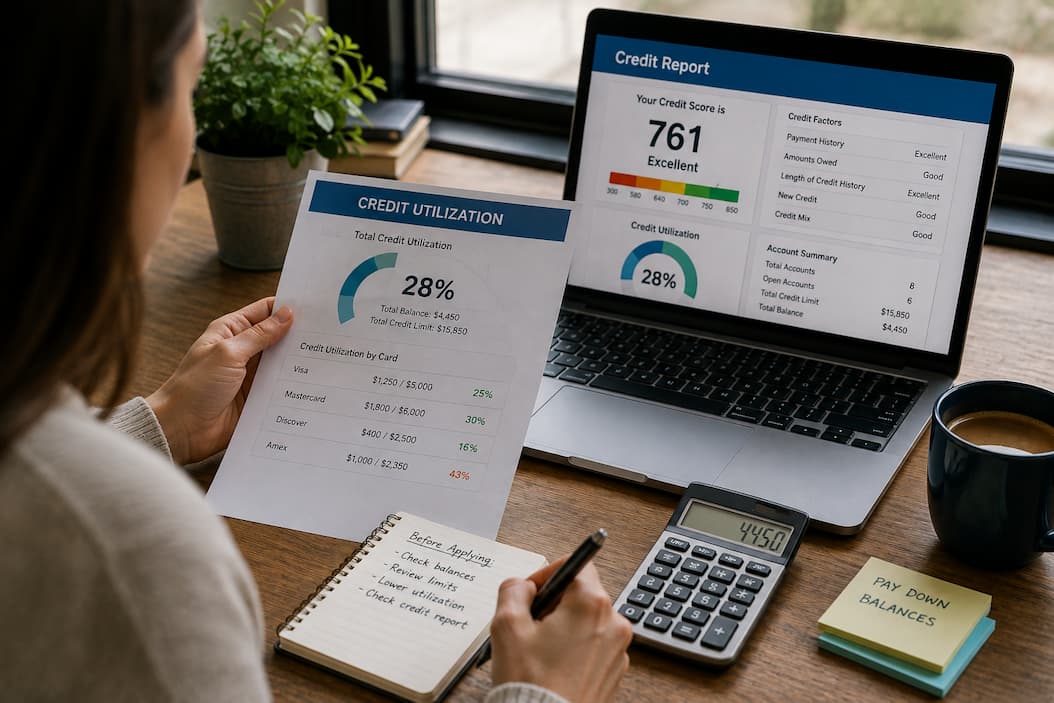
When applying for a new loan or credit card, people typically look at their overall credit score, income, or work experience. While these factors are important, credit utilization is another often-overlooked factor in credit scores. Although the term frequently appears in financial articles, many loan applicants do not fully understand what it means or why lenders look at it during the application process.
Credit utilization is not just about your total debt; it refers to how you use your available credit. Even if two people have the same credit card balance, their available credit limits can lead to very different credit utilization rates. Credit utilization helps you understand your credit usage because it highlights this difference. By carefully analyzing your current credit usage, you can better understand your overall financial situation before applying for a new loan. Even if you always pay on time, insight into this part of your credit history can help you avoid unexpected situations during the application process.
Credit Utilization Reflects How You Use Available Credit
Credit utilization compares the balance of revolving credit accounts (such as credit cards) to the total credit limit of those accounts. Suppose someone has a credit card with a limit of $5,000. If someone draws $1,000, their credit utilization rate is 20%. If the balance rises to $4,000, even if the cardholder continues to pay on time, the credit utilization rate will rise to 80%.
This is an important distinction because credit utilization measures the percentage of available credit that you use, not just the amount. A higher balance does not always indicate financial problems, and a lower balance does not always mean that you are managing your finances well. The overall picture is the most important factor. The credit utilization rate is often considered by lenders and credit tracking systems as one of the indicators of how responsibly a borrower handles revolving credit in the long term. Therefore, it is wise to check your credit utilization rate before applying for additional credit.
Overall Utilization and Individual Card Utilization Are Different
Many people think that calculating a single percentage of credit utilization is sufficient, but there are actually two ways to verify the figure. The first is the total credit utilization rate, which takes into account the balance and credit limit of all revolving credit accounts. The second method is the utilization rate of an individual credit card, which examines the specific usage of each card separately.
Consider this example:
| Credit Card | Credit Limit | Current Balance | Utilization |
|---|---|---|---|
| Card A | $4,000 | $3,200 | 80% |
| Card B | $6,000 | $0 | 0% |
| Total | $10,000 | $3,200 | 32% |
In this situation, the overall utilization appears moderate, but one individual card has a relatively high utilization rate. Looking at both perspectives provides a more complete understanding of how available credit is currently being used. Reviewing both figures before applying for new credit helps identify whether balances are concentrated on a single account or distributed differently across available credit lines.
Why Utilization Can Change Even When Spending Doesn’t
A surprising aspect of credit card usage is that it does not always change with how people spend their money. The reported percentage can sometimes be skewed by the timing of transactions or payments. If you make a series of necessary purchases before the credit card company reports your account balance, your credit card usage may be temporarily higher than normal, even if you plan to pay off the debt in full before the due date.
While paying off debt immediately after the reporting date may improve your financial situation, this may not change your credit card usage until the next reporting period. This insight helps explain why credit card usage is not always a perfect reflection of someone’s long-term spending pattern. It is simply a snapshot of account data at a specific point in time.
Everyday Events that Can Increase Credit Card Usage
Financial problems do not always lead to higher credit card usage. Revolving credit can temporarily increase for all sorts of normal reasons, and this does not mean that you are bad with your money. Major travel plans, unexpected home repairs, medical bills, replacement of household appliances, Christmas shopping, or business expenses reimbursed by your employer after the fact can all lead to an increase in your credit limit.
Some people use credit cards to pay for daily expenses, to collect points, or for the convenience of budgeting. They pay off the credit card in full every month. However, depending on the repayment term, credit usage can sometimes appear high. Therefore, reviewing your credit activity over several months provides a better picture of your overall credit habits. Although short-term increases in your credit limit do not always reflect your future financial situation, it is still wise to review this data before applying for a new loan.
Review Your Credit Report Before Submitting a New Application
Many people check their credit score before applying for a new loan but ignore the information in their credit report. By reviewing your credit report, you can verify if the displayed amounts are correct, find bills you may have forgotten, and confirm that the displayed credit limits are accurate. Moreover, this gives you the opportunity to detect errors in the report that could affect your overall credit profile.
If certain information does not match your data, it is often easier to resolve the issue before submitting a new loan application than to discover it after the loan has been approved. This guide not only explains how to use a credit report but also helps you ensure that your credit history accurately reflects your financial situation and that there are no unexpected discrepancies in your report.
Consider Your Credit Utilization Before Submitting an Application
Before you fill out a new credit card or loan application, checking your current credit limit is a wise step. Although there is no fixed percentage that guarantees approval or rejection, knowing your current credit limit gives you a general picture of your credit situation.
If your credit report shows a higher balance than normal due to recent purchases, an upcoming trip, or seasonal expenses, it may be wise to wait until these balances have decreased and been updated through the normal reporting cycle before submitting an application. The timing of your application can sometimes affect the information lenders see during the assessment process. However, this does not mean that all applications must be rejected. If you need money urgently, you may not be able to wait due to financial circumstances. It is important to understand your current credit situation so that you can make informed decisions rather than submitting an application without prior knowledge.
Lowering Credit Utilization Doesn’t Always Mean Spending Less
Many people think that using less credit card means they have to stop daily spending altogether. However, the right approach is often to carefully manage your account balance, rather than drastically cutting back on your daily expenses. For example, some users choose to pay off their balance early instead of waiting until the maturity date. Others do not put all their planned expenses into a single account, but spread them across multiple lines of credit. These methods may affect your account balance, but still allow you to spend normally.
However, it is not advisable to do things that do not align with your long-term spending pattern just to meet the requirements of a single credit card application. In most cases, long-term financial management is much better than short-term changes that are difficult to sustain. The key is not to improve your credit score, but to understand how your account balance reflects your actual spending habits.
Closing Credit Cards May Affect Utilization
Some people consider canceling old credit cards they no longer use when they take a closer look at their finances. In some cases, simplifying financial accounts can be a sensible step, but it is crucial to understand how this choice affects your credit usage. If you take out a revolving credit facility, your available credit limit may decrease. Even if your expenses do not change, your total credit usage may increase if the outstanding balance remains the same while your available credit limit decreases.
For example:
| Situation | Total Credit Limit | Total Balance | Overall Utilization |
|---|---|---|---|
| Before closing an account | $15,000 | $3,000 | 20% |
| After closing a $5,000 account | $10,000 | $3,000 | 30% |
This doesn’t mean closing an account is always the wrong decision. Factors such as annual fees, account management, personal preferences, and overall financial goals also matter. The key is understanding how changes to available credit may influence utilization before making a decision.
Make Credit Utilization Part of Your Regular Financial Routine
You can manage credit utilization much more easily when you review it regularly instead of only before applying for new credit.Checking account balances, confirming available credit limits, and reviewing monthly statements can help you notice changes before they become significant. These routine reviews also make it easier to identify unexpected transactions, billing errors, or changes in spending patterns that deserve attention.
Rather than focusing on one application, consider utilization to be one part of your broader financial picture. Alongside timely payments, careful borrowing, and regular monitoring of your credit reports, it contributes to a more complete understanding of how your credit accounts are being managed. Consistent financial habits usually provide greater long-term benefits than reacting only when it’s time to submit an application.
A Simple Credit Utilization Review Checklist
Before applying for new credit, spending a few minutes reviewing your revolving accounts can help you better understand your current credit profile.
| Review Area | Questions to Consider |
|---|---|
| Current Balances | Are reported balances higher than usual this month? |
| Available Credit | Have credit limits changed recently? |
| Individual Cards | Is one account carrying a much higher balance than the others? |
| Recent Purchases | Have large planned expenses temporarily increased utilization? |
| Credit Report | Do reported balances and account details appear accurate? |
| Application Timing | Does your current credit profile accurately reflect your usual financial habits? |
This review isn’t intended to predict the outcome of a credit application. Instead, it helps ensure you understand the information that may be considered during the application process.
Final Thoughts
Credit utilization is often associated with credit scores, but it represents a more specific concept: the percentage of your available credit that you currently use through revolving credit. Understanding this relationship helps you get a better picture of your creditworthiness before applying for new loans.
Checking your total credit utilization and individual account balances, verifying the accuracy of your credit reports, and understanding their maturity dates can help you apply for new loans with more confidence. These steps do not guarantee loan approval, but they do enable you to make informed choices based on a clearer understanding of your financial situation.
The most effective management of your credit utilization is not based on short-term adjustments just before applying for loans, but rather on developing good financial habits, regularly checking your accounts, and responsibly managing your available credit in the long term. When these habits become part of your daily routine, preparing for future credit applications usually becomes much easier.

The Interest-Story Editorial Team creates practical financial guides covering budgeting, saving, debt, credit, side income, student finance, and everyday financial planning. Our content is written to make complicated financial topics easier to understand, with information organized around real-life questions and decisions. We use reliable sources for facts that can change over time and encourage readers to verify important financial, legal, and government requirements with the appropriate official organization. Our goal is straightforward: provide useful information that helps readers understand their options and make more informed financial decisions.