
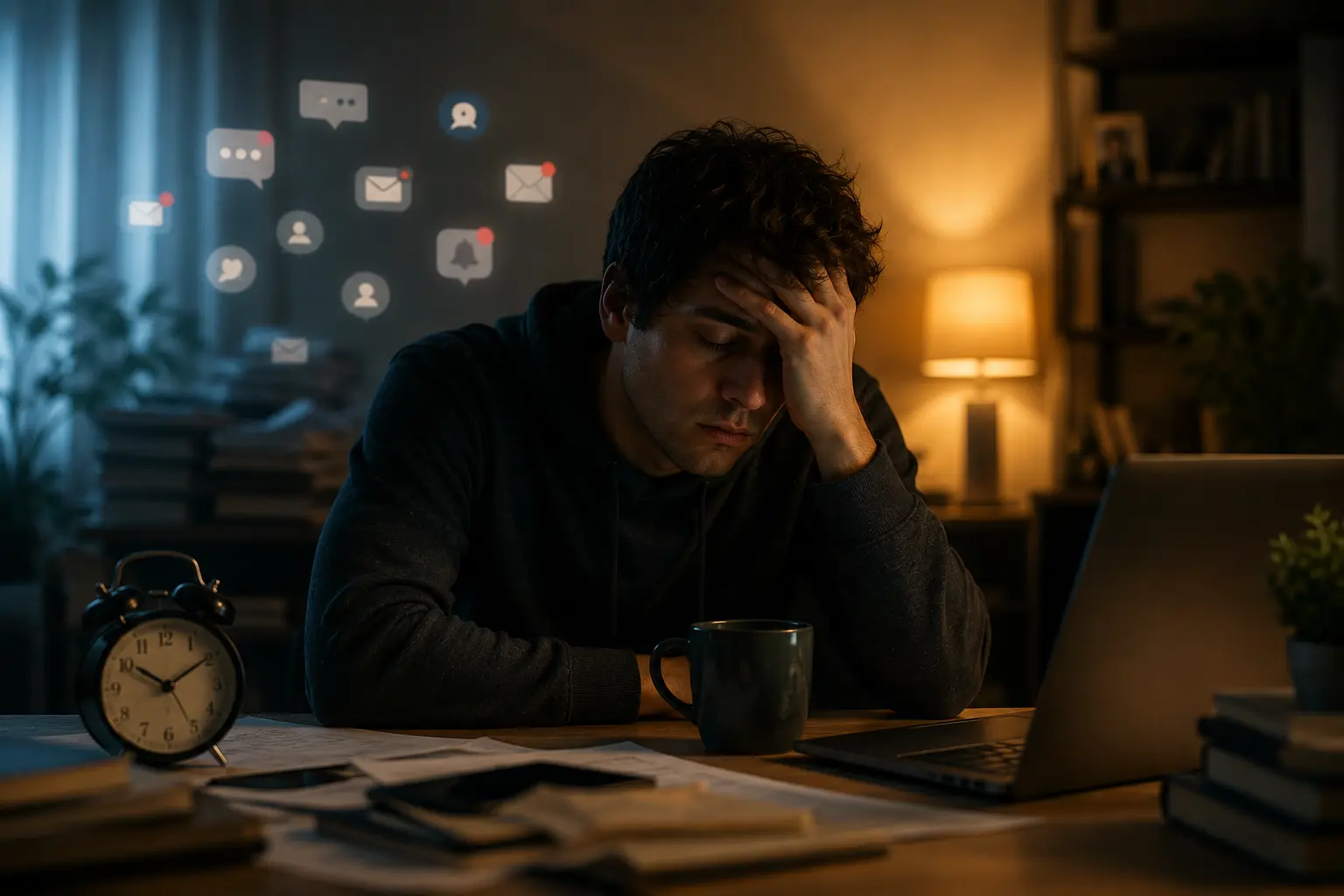
For a long time, I genuinely believed my constant exhaustion came from one simple reason: I just wasn’t resting enough. That explanation felt logical. Modern life is busy, work never fully stops, phones constantly demand attention, and most people sleep less than they should. But over time I started noticing something strange. Even after sleeping longer, taking weekends off, or technically “resting,” the feeling often remained.
Not always physical exhaustion. Sometimes it felt more like mental heaviness. My brain constantly felt overloaded, unfocused, distracted, and emotionally drained for reasons I couldn’t fully explain. The strange part was that many people around me seemed to feel exactly the same way.
Everyone looked tired. Everyone complained about low energy. Everyone felt mentally exhausted even without doing intense physical labor. That made me start paying more attention to what was actually happening psychologically and biologically. The more I read and observed my own habits, the more I realized that modern exhaustion is often much deeper than simple lack of sleep.
Constant Stimulation Quietly Destroys Mental Energy
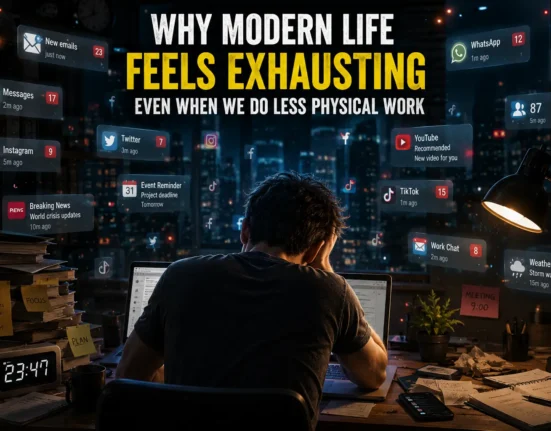
One of the biggest things I realized is that the human brain almost never truly rests anymore. Even during “free time,” most people continue consuming stimulation:
- scrolling social media,
- watching short videos,
- checking notifications,
- switching between apps,
- reading news,
- answering messages,
- consuming endless content.
For a while, I thought these things helped me relax. But honestly, I slowly noticed the opposite happening. My attention span became weaker, concentration became harder, and my mind constantly felt noisy.Research from American Psychological Association has repeatedly discussed how information overload and digital overstimulation increase stress, anxiety, and mental fatigue.
Source:
What surprised me most was realizing that exhaustion is not always caused by doing difficult work. Sometimes it’s caused by never allowing the brain to fully disconnect.
I started noticing that after spending hours online, I often felt more tired than after doing actual focused work.
Short-Form Content Trains the Brain to Stay Restless
This was another major realization. Platforms built around short-form content constantly train the brain to expect fast emotional stimulation. Every few seconds there’s:
- a new video,
- a new image,
- a new opinion,
- a new emotional trigger,
- another dopamine hit.
At first, this feels entertaining. Over time, though, the brain adapts to constant novelty and begins struggling with slower activities:
- reading,
- studying,
- deep focus,
- long conversations,
- quiet thinking.
Personally, I started noticing that my patience became weaker without realizing it. Concentration required more effort than before. Even relaxation became difficult because my brain constantly searched for stimulation. Researchers studying dopamine and digital behavior from institutions including Harvard Medical School have explored how overstimulation affects attention, emotional regulation, and reward systems.
Source:
Honestly, I think many people today confuse stimulation with rest. They are completely different things.
Sleep Alone Does Not Solve Mental Exhaustion
This was probably the most important lesson for me personally. For a long time, I believed more sleep would automatically fix everything. Sleep absolutely matters, of course. Chronic sleep deprivation damages almost every system in the body. But I eventually realized that mental exhaustion can still exist even when someone technically sleeps enough hours.
The brain also needs:
- silence,
- reduced stimulation,
- emotional stability,
- meaningful focus,
- moments without constant input.
I noticed that on days when I spent less time online, went outside more, read books, or focused deeply on one task instead of multitasking constantly, my energy felt completely different. Not necessarily more “excited,” but calmer and clearer. That difference became impossible to ignore.
Emotional Stress Quietly Drains Energy
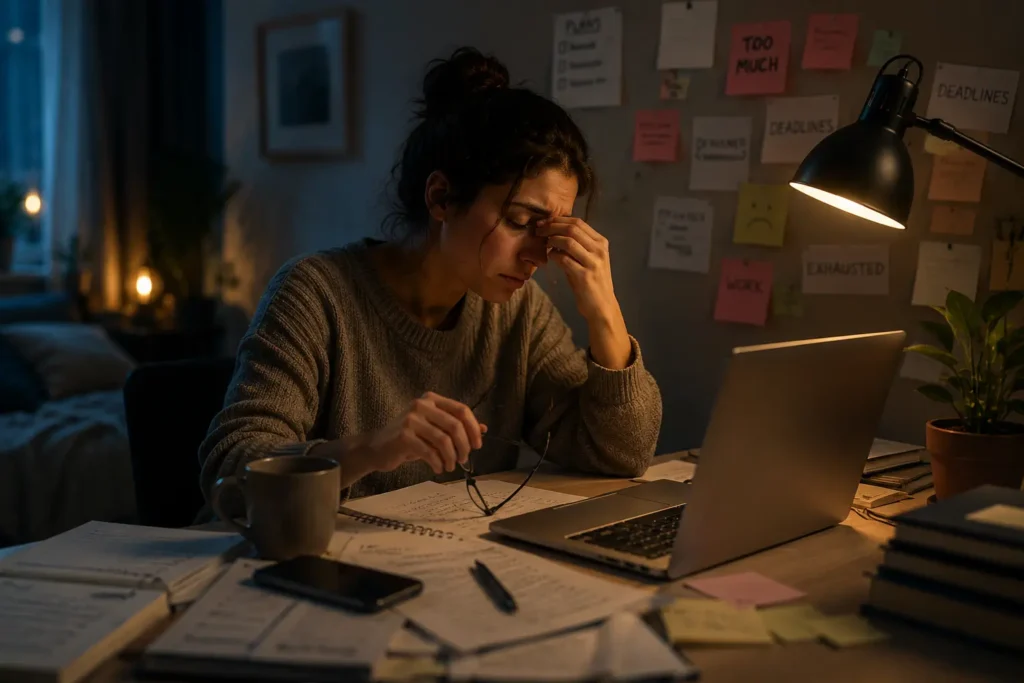
Another thing I underestimated was emotional fatigue.
Modern people carry enormous invisible pressure:
- financial anxiety,
- uncertainty about the future,
- comparison through social media,
- career stress,
- relationship problems,
- constant productivity pressure.
Even when someone looks physically relaxed, the nervous system may still remain psychologically tense. I honestly think many people are not simply tired from work. They are exhausted from constant background stress that never fully disappears. Research from Mayo Clinic has shown strong links between chronic stress and fatigue, concentration problems, emotional burnout, and low energy.
Source:
Once I understood this better, I stopped treating exhaustion purely like a physical problem. Very often it’s psychological too.
I Started Protecting My Attention More Carefully
One of the biggest practical changes I made was becoming much more protective of my attention. Not perfectly, of course. Modern life makes complete disconnection unrealistic. But I started noticing which habits made my mind calmer and which ones left me mentally scattered.
For example:
- reducing endless scrolling,
- spending less time consuming random content,
- limiting notifications,
- avoiding constant multitasking,
- reading longer content,
- walking without headphones sometimes,
- sleeping with the phone farther away,
- focusing on fewer tasks at once.
These changes sounded small initially, but together they noticeably affected my energy levels. Honestly, I think attention has become one of the most valuable psychological resources today. People protect money carefully, but many allow their attention to be destroyed constantly without realizing how exhausting that becomes.
Physical Health Still Matters More Than People Admit
At the same time, I also realized something important: many people search for complicated psychological explanations while ignoring basic physical health completely.
Things that strongly affected my energy included:
- better sleep schedule,
- less caffeine late in the day,
- more movement,
- hydration,
- eating more consistently,
- spending time outside,
- reducing screen exposure before sleep.
None of these habits feel dramatic individually. But together they affect the nervous system far more than many people realize. Modern lifestyles became extremely disconnected from how human bodies evolved to function. People spend huge portions of life:
- indoors,
- sitting,
- staring at screens,
- sleeping irregularly,
- consuming stimulation nonstop.
The body and brain eventually react to that.
Productivity Culture Made Rest Feel Guilty
This is another problem I slowly noticed. Modern culture constantly pushes the idea that every moment should be productive. People feel pressure to:
- optimize constantly,
- work harder,
- improve endlessly,
- stay busy,
- keep consuming information.
As a result, many individuals no longer know how to rest without guilt.
Even during breaks, the brain continues thinking:
- “I should be doing more.”
- “I’m wasting time.”
- “Others are progressing faster.”
That mindset quietly destroys recovery because the nervous system never fully relaxes.
Honestly, learning how to disconnect mentally became just as important as learning how to work hard.
I Stopped Chasing Constant Motivation
One thing that unexpectedly helped me was accepting that low energy sometimes happens naturally. Earlier, I constantly tried forcing myself into endless productivity and motivation. But over time I realized the brain is not designed to operate at maximum intensity permanently.
Some periods naturally involve:
- lower energy,
- reflection,
- slower progress,
- emotional recovery.
And honestly, fighting reality constantly only creates more exhaustion. This doesn’t mean giving up discipline or ambition. It simply means understanding that sustainable energy matters more than temporary overwork.
Final Thoughts
I honestly think modern exhaustion is much more psychological than many people realize. Yes, sleep and physical health matter enormously. But constant stimulation, emotional stress, information overload, social comparison, and nonstop digital consumption quietly drain mental energy every day too.
Personally, the biggest improvements came not from dramatic life changes but from protecting attention more carefully, reducing overstimulation, slowing down mentally, and becoming more intentional about what I consumed daily. Modern life constantly pushes people toward noise, distraction, and endless input. Sometimes real recovery begins when the brain finally gets a chance to breathe again.
Written by Garegin
See also:
how motivation disappears after constant mental pressure


Leave feedback about this