
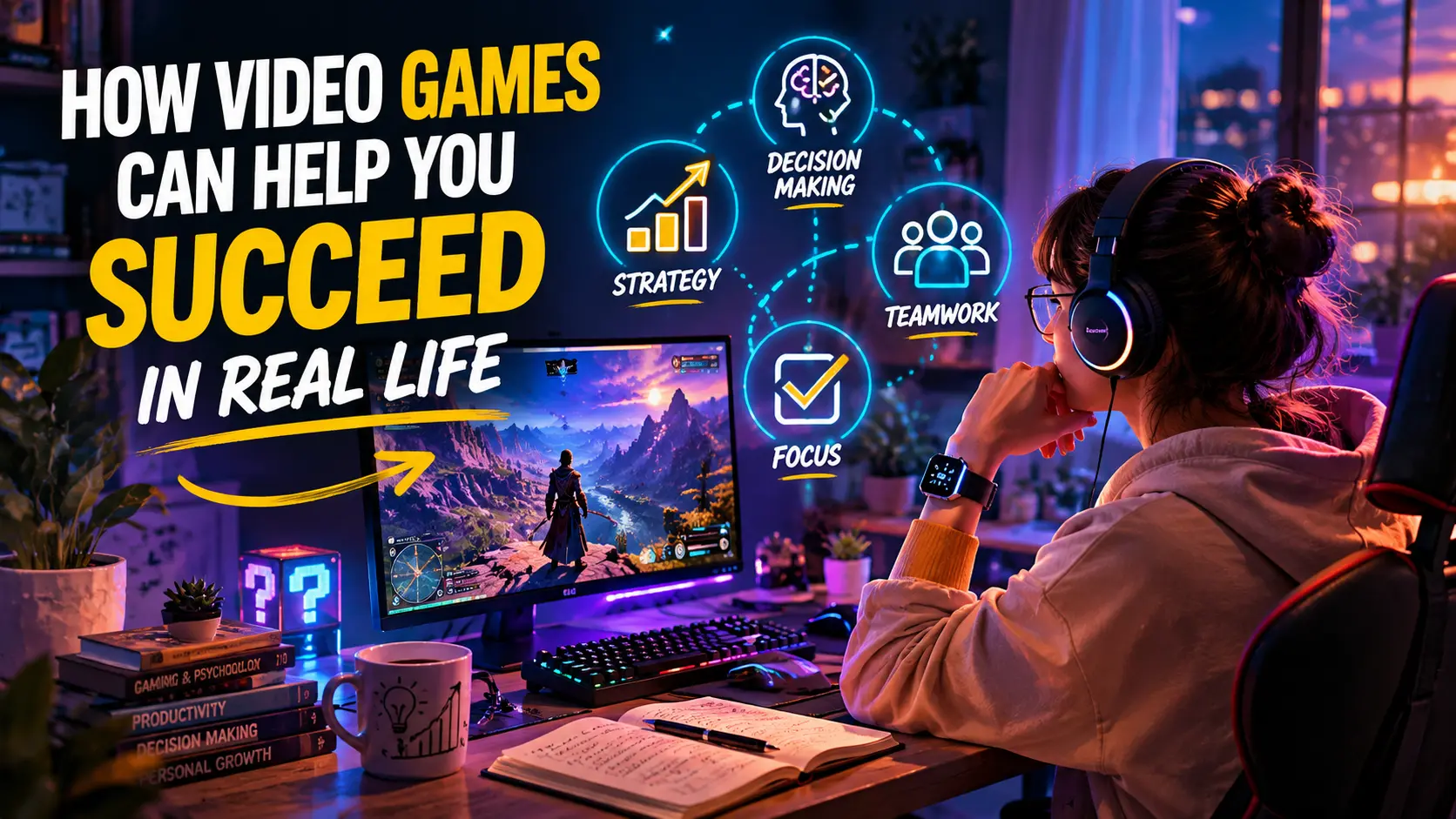
For years, video games were treated like the enemy of productivity. Parents blamed them for bad grades, teachers saw them as distractions, and many adults believed gaming was simply a waste of time. I used to hear the same thing constantly growing up: “You’re spending too much time on games. Do something useful.”
But the older I get, the more I realize something interesting: many of the skills that helped me in work, decision-making, stress management, and even communication were developed while sitting in front of a computer screen playing games.
Of course, gaming can become unhealthy when it turns into addiction. But I honestly think society often ignores the positive side of gaming completely. In moderation, games can teach skills that are surprisingly valuable in real life — especially in today’s digital world.
And science increasingly supports this idea.
Video Games Train Fast Decision-Making
One of the biggest things games teach is how to make decisions quickly under pressure.
Competitive games force players to process information in seconds:
- What is happening?
- What should I prioritize?
- Should I attack or defend?
- Is this risk worth taking?
This constant decision-making becomes a kind of mental training.
Researchers from the University of Rochester found that action video games can improve visual attention and speed of decision-making. According to their research, gamers often make decisions faster without losing accuracy.
Source:
Honestly, I’ve noticed this in my own life too. When working in digital marketing or dealing with technical website problems, I rarely panic anymore. Games trained me to stay calm while processing multiple things at once.
That doesn’t mean games magically make people smarter. But they absolutely train the brain to react faster in dynamic environments.
Games Teach You How to Lose Without Quitting
This might sound simple, but it’s one of the most underrated life skills.
In games, failure is constant.
You lose matches.
You fail missions.
You make terrible decisions.
You start over again and again.
And eventually, you stop being afraid of failure.
I genuinely believe this mindset transfers into real life. Many people give up immediately after one failed business attempt, one rejected application, or one embarrassing mistake. Gamers are often more comfortable with repetition and failure because games normalize the idea that improvement comes through losing.
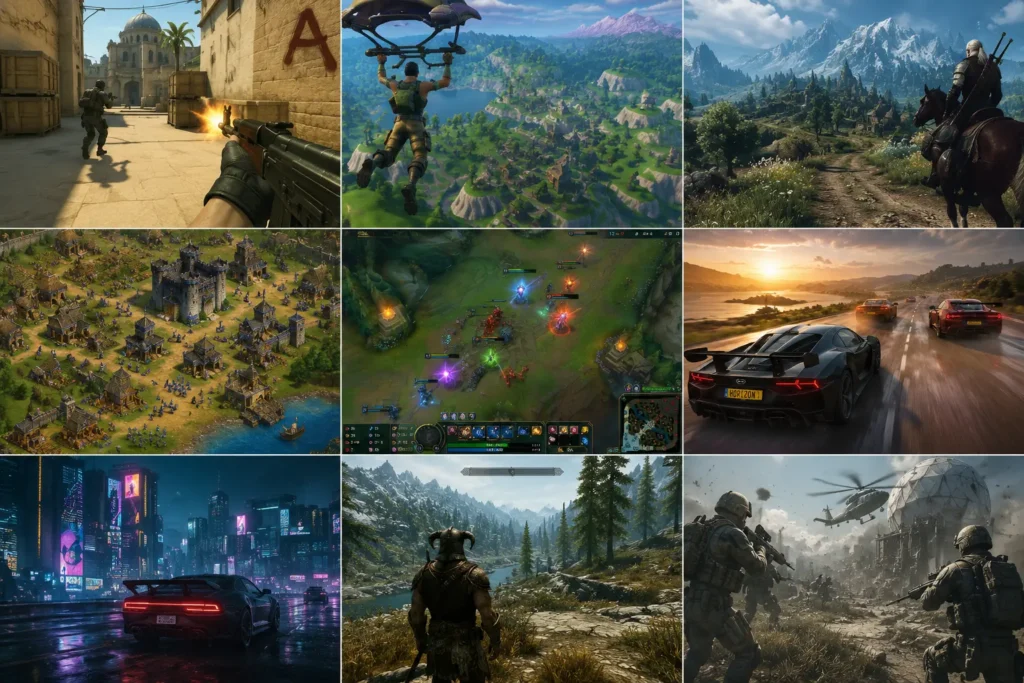
This is especially visible in competitive games like:
- Counter-Strike 2
- League of Legends
- Dota 2
- StarCraft II
Nobody becomes good at these games quickly. Players improve through thousands of failures.
Real life works the same way.
Strategy Games Can Improve Long-Term Thinking
Strategy games are basically problem-solving simulators.
Games like:
- Civilization VI
- Age of Empires IV
- Football Manager 2024
force players to think long-term instead of chasing instant rewards.
You learn:
- resource management,
- patience,
- planning,
- delayed gratification,
- risk assessment.
In real life, success often depends on exactly these skills.
I personally think strategy games helped me understand systems better. Marketing campaigns, SEO growth, branding, even financial planning — all of these feel surprisingly similar to strategy games sometimes. You allocate resources, predict outcomes, adapt to competitors, and make decisions with incomplete information.
It’s not that games directly teach business. But they create a mindset that becomes useful later.
Multiplayer Games Improve Communication Skills
This is probably the most misunderstood part of gaming.
Many people imagine gamers as isolated individuals sitting alone in dark rooms. But modern multiplayer games are often deeply social experiences.
Games require:
- teamwork,
- leadership,
- communication,
- conflict management,
- coordination.
In many online games, success depends less on individual talent and more on how well a team communicates under pressure.
A study published by the American Psychological Association suggested that multiplayer gaming can strengthen social connections and cooperation skills.
Source:
I’ve personally met people through gaming from countries I may never even visit. Some online friendships surprisingly lasted longer than real-life friendships.
In a strange way, games can make people feel less alone.
Games Can Reduce Stress — If Used Correctly
There’s a reason many adults play games after work.
Games create immersion. They temporarily disconnect the brain from stress, anxiety, and repetitive routines.
According to research discussed by Oxford Internet Institute, moderate gaming may positively affect mental well-being when balanced properly.
Source:
And honestly, I understand why.
Sometimes after an exhausting day, a short gaming session feels mentally healthier than endlessly scrolling social media. At least games actively engage the brain instead of passively consuming information.
But this only works when gaming stays controlled.
That distinction matters a lot.
The Dangerous Side of Gaming
I think balanced discussions about gaming are important because the negative side absolutely exists too.
Games are designed to kee
Source:
This is why I don’t agree with people who romanticize gaming as purely positive. Like any powerful tool, its impact depends on how it’s used.
Gaming can either sharpen your mind or completely consume your time.
The difference is self-control.
p attention. Some modern games use reward systems that can become psychologically addictive.
Too much gaming can lead to:
- poor sleep,
- reduced physical activity,
- social isolation,
- lower productivity,
- emotional burnout.
The World Health Organization officially recognized “gaming disorder” as a mental health condition in extreme cases.
Why Successful People Often Grew Up Gaming
Something I’ve noticed recently is how many successful people openly talk about gaming backgrounds.
Many programmers, marketers, designers, entrepreneurs, and tech founders grew up playing games heavily.
I honestly don’t think that’s accidental.
Gaming naturally attracts people who enjoy:
- systems,
- experimentation,
- optimization,
- competition,
- creativity,
- technology.
In many ways, games were the first interactive digital environments where people learned how to solve complex problems independently.
For an entire generation, gaming was unofficial mental training.
Gaming Is No Longer “Just for Kids”
The stereotype that games are childish feels outdated now.
The gaming industry is larger than the movie and music industries combined in terms of revenue, according to multiple market reports.
Esports fill stadiums.
Game developers influence culture.
Professional gamers earn millions.
Even companies use gamification principles in apps and marketing.
Gaming has become part of modern culture whether people like it or not.
And honestly, I think future generations will look at games very differently than older generations did.
Final Thoughts
I’m not saying everyone should spend ten hours a day gaming.
But I do think people oversimplify the conversation too much.
Video games can teach:
- resilience,
- strategic thinking,
- fast decision-making,
- communication,
- adaptability,
- emotional control.
At the same time, they can also become unhealthy when balance disappears.
Personally, I no longer see gaming as “wasted time” by default. Like books, sports, or movies, games are simply tools. Their value depends on how consciously we use them.
And sometimes, the skills learned during late-night matches end up becoming unexpectedly useful in real life.
Written by Interest Story Editorial Team
We publish personal growth, emotional wellbeing, and self-improvement articles designed to encourage healthier thinking patterns, emotional awareness, and meaningful long-term progress.
See also:
why overthinking can hurt decision-making






Leave feedback about this